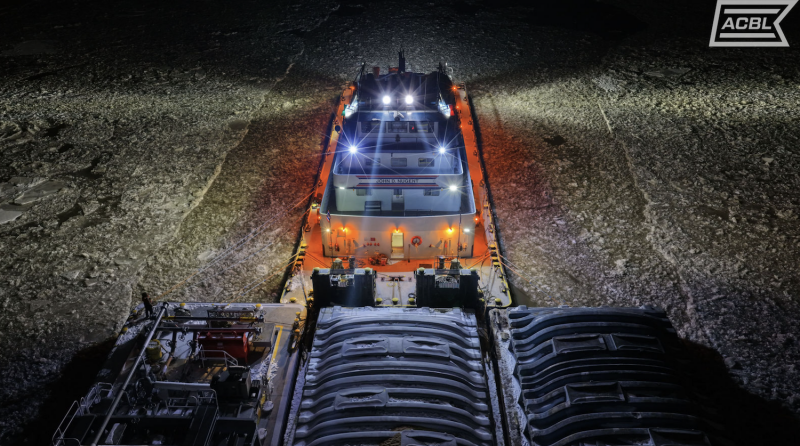
A renewed bout of Arctic air descending from the Ohio Valley to the Northeast Feb. 6-7 kept mariners and the Coast Guard working hard to maintain critical fuel and supply links and safe passenger ferry service in metro areas.
Photos released by American Commercial Barge Lines showed its towboats carrying on in heavy river ice and winter twilight last week. In New York Harbor, Coast Guard icebreakers and ferry operators kept commuter routes as open as possible.
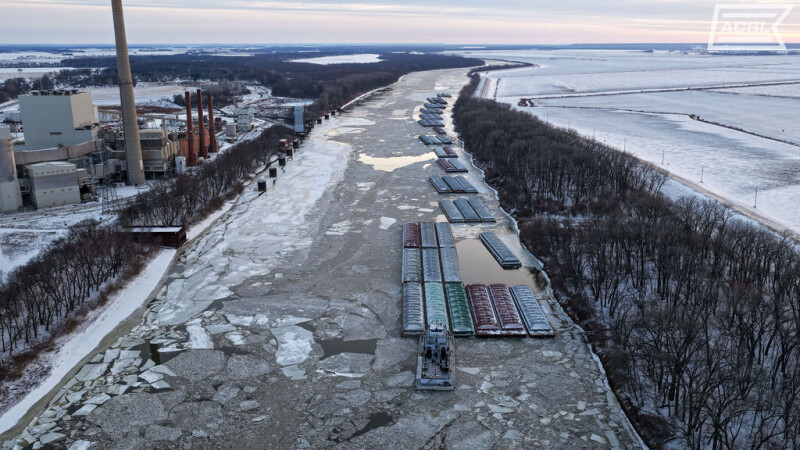
The U.S. Army Corps of Engineers Louisville District said it continues to actively manage ice conditions on the Ohio River, working with the U.S. Coast Guard and towing industry to ensure the movement of commerce as icy conditions and sub-freezing temperatures persist.
Tow size restrictions have been implemented, and navigation traffic is passing through all seven locks and dams in the Louisville District, the Corps said.
“You may have seen NYC Ferry boats on the water this week. Our crews have been testing docks and routes to see what's possible,” operators of the city’s now decade-old short route services wrote in a Feb. 5 online update. “Combined with ongoing forecasting and landing-by-landing ice tracking, these tests allow us to better predict conditions and prepare operations for a safe and reliable return.”
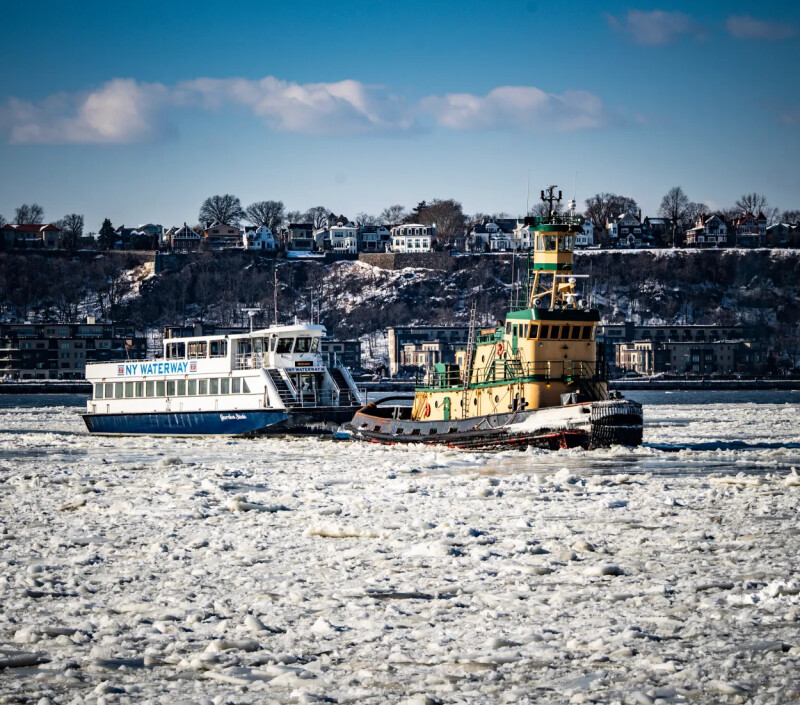
“While slightly warmer weather has helped break up some ice, large ice floes are still moving through the harbor. With colder temperatures and strong winds expected this weekend, conditions will remain challenging.”
Up the Hudson River and in New England, the demands of ice are unrelenting on Coast Guard crews running Operation RENEW (Reliable Energy for Northeast Winters). The service’s workhorse WYTL class 65' harbor tugs, capable of breaking ice up to 12" thick, are much in demand.
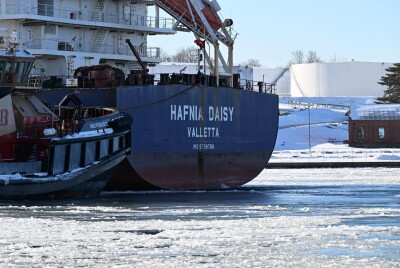
The Coast Guard cutter tug Shackle, homeported at Portland, Maine, shuttled from ports to Nantucket in recent days. Conducting ice escorts in Boston Harbor, the Shackle assisted to free up the tanker Hafnia Daisy so it could safely maneuver through the harbor.
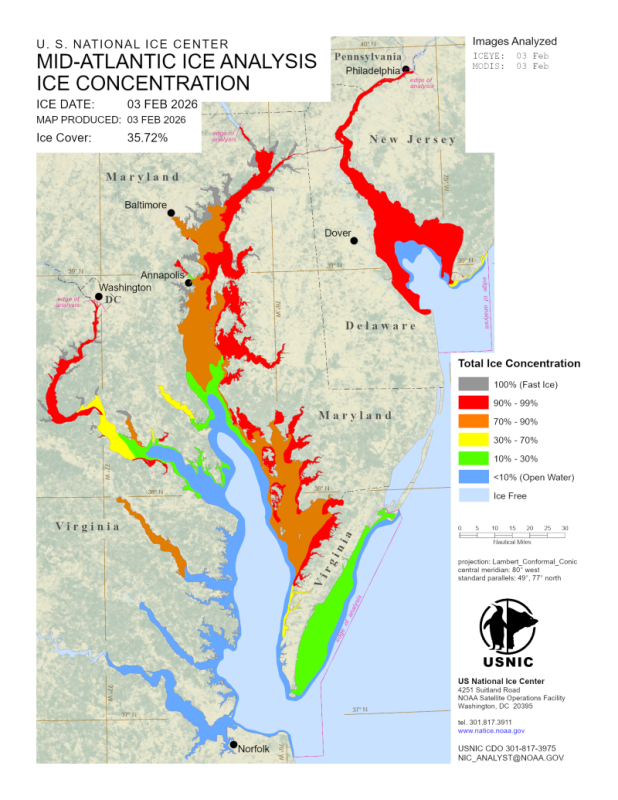
The ice will continue and potentially extend in the region into next week. The U.S. National Ice Center projected Feb. 3 that ice extent in the Mid-Atlantic coastal bays was exceeding 90% in most of Delaware Bay and reaching a similar extent in some Chesapeake tributaries.