



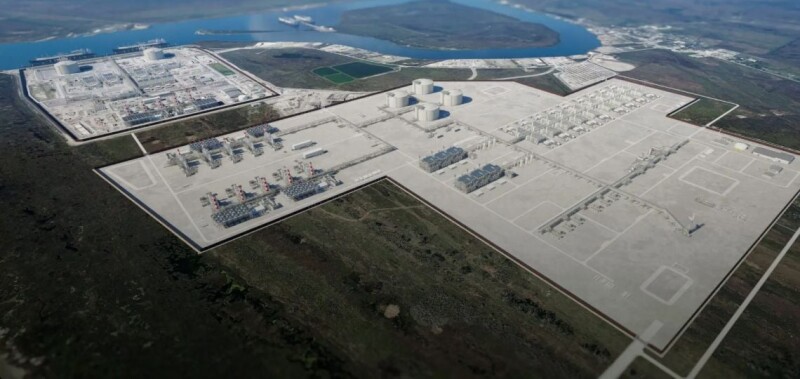
Southwest Louisiana fishermen renewed their push in a federal appeals court to halt construction of the Calcasieu Pass 2 liquefied natural gas pipeline and terminal, contending the project is bringing “imminent and irreparable harms” to the surrounding community and fisheries.
In a Sept. 5 motion filed in the District of Columbia Court of Appeals, a coalition of fishermen and environmental groups seek to stay the Federal Energy Regulatory Commission’s permitting of Venture Global’s LNG “CP2” export terminal and the 85-mile CP Express Pipeline to transport gas from east Texas.
Construction and dredging during the height of fishing season is smothering shrimp, oysters and fish in suspended sediment, according to court papers.
“Compounding the harms to this fishing season, on August 4, 2025, Venture Global was involved in dredging operations when sediment-laden spoil escaped containment and spilled across hundreds of acres of marsh, burying crab traps, oyster beds, and killing wildlife,” the objectors stated. “The dredge material not only smothered oyster reefs, but it also trapped aquatic life, killing almost every shrimp, crab and fish.”
Their coalition includes the groups For a Better Bayou; Fishermen Involved in Sustaining Our Heritage; the Natural Resources Defense Council; Louisiana Bucket Brigade; Healthy Gulf; the Sierra Club; Texas Campaign for the Environment; and theTurtle Island Restoration Network.
The new action revives a September 2024 court motion led by the Southern Environmental Law Center to stay the original federal approvals. The law center and allies argue that cumulative environmental – and energy policy – effects of those decisions are now compounding.
Other FERC decisions have already “transformed the region – once known for its thriving fishing industry and natural beauty – into an industrial hub for foreign commerce, leaving American communities, industry, and ecosystems to bear the costs,” according to the fishermen. “FERC has approved several other LNG facilities and expansions in the immediate vicinity that are either under construction or awaiting final investment decisions.”
“If all the export facilities approved by FERC became fully operational tomorrow, the United States would export nearly half of our domestic production, harming our economy and consumers,” the fishermen contend.
