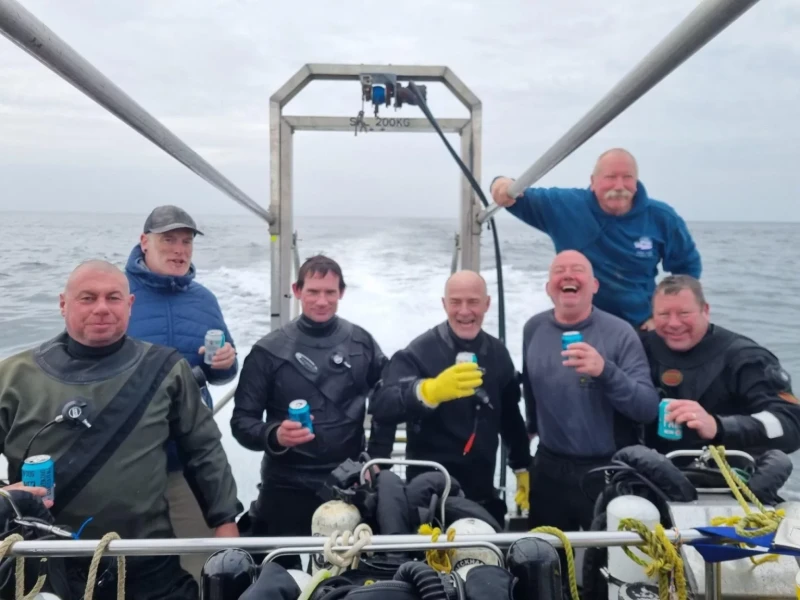
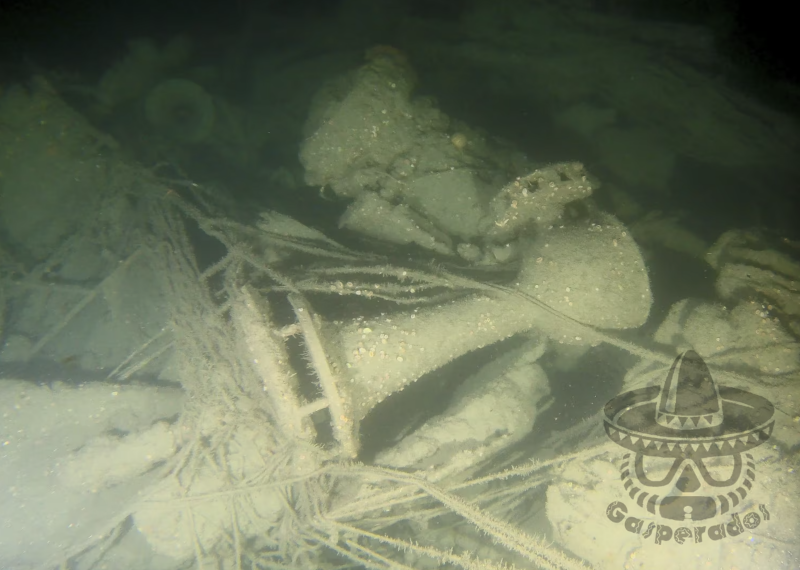
The wreck of the U.S. Coast Guard cutter Tampa, the single largest American naval combat loss of World War I, was located and confirmed by a British technical diving team at depths exceeding 300’ around 50 miles off Cornwall in the United Kingdom.
The 190’ Tampa was sunk Sept. 26, 1918, torpedoed by the German submarine UB-91 in the Bristol Channel. According to Coast Guard history the cutter sank in less than three minutes, with the deaths of all 131 people aboard—111 Coast Guardsmen, four U.S. Navy personnel, and 16 British Navy personnel and civilians.
"Since 1790, the Coast Guard has defended our nation during every armed conflict in American history, a legacy reflected in the courage and sacrifice of the crew of Coast Guard Cutter Tampa," said Adm. Kevin Lunday, commandant of the Coast Guard, after the wreck was discovered.
"When the Tampa was lost with all hands in 1918, it left an enduring grief in our service. Locating the wreck connects us to their sacrifice and reminds us that devotion to duty endures. We will always remember them. We are proud to carry their spirit forward in defense of the United States."
When the United States entered World War I in 1917, six Coast Guard cutters were deployed overseas on convoy duty to protect Allied shipping. Tampa was the only one lost.
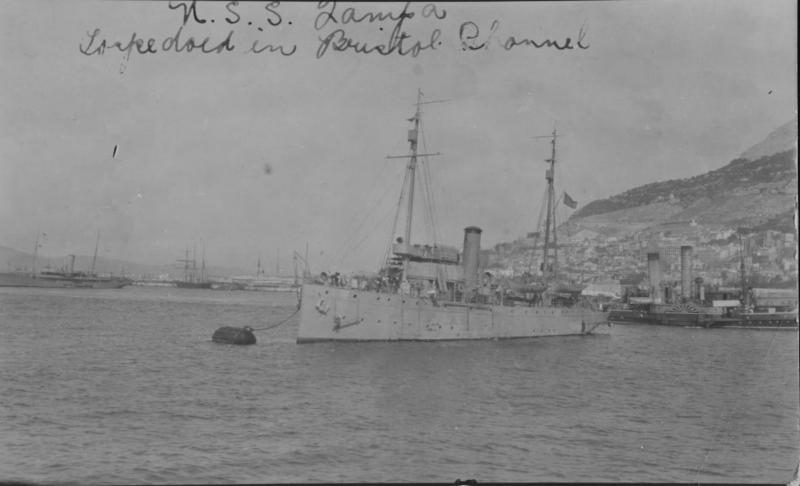
“Tampa was one of six long distance cruising cutters selected in July 1917 for overseas convoy duty in the war zone of the North Atlantic. She was chosen in part for her large coal bunkers and water tanks, which allowed for long distance cruising. These cutters were part of Squadron 2, Division 6 of the Atlantic Fleet Patrol Forces.”
In late October 1917 the Tampa reached Gibraltar and was assigned to escort a convoy to England.
“North Atlantic convoys were established by the British Admiralty in May 1917 to stem the catastrophic losses to German U-boats of Allied merchant and troop ships transiting the North Atlantic and Mediterranean Sea region,” the historian’s office noted. “As the convoy system became widespread, Allied shipping losses dropped considerably throughout 1917 and 1918. Tampa’s war service, escorting 402 merchant steamers safely between Allied ports during the conflict, contributed notably to the convoy system’s overall success.”
In September 1918 the Tampa and crew were commended for their performance before steaming out for their final convoy escort. On Sept. 26, the Tampa detached from its convoy to replenish its coal and “proceeded full steam ahead towards Milford Haven, Wales, her lights turned off as a security measure. Tampa, sailing alone at dusk, with her silhouette visible against the nighttime sky, was sighted by a German submarine, UB-91.”
“At 8:15 pm, UB-91 launched a torpedo which blasted a hole in Tampa’s hull amidships. This was followed by a second explosion, caused either by ignited coal dust or depth charges being detonated as water filled the ship. Tampa sank with all hands in less than three minutes.”
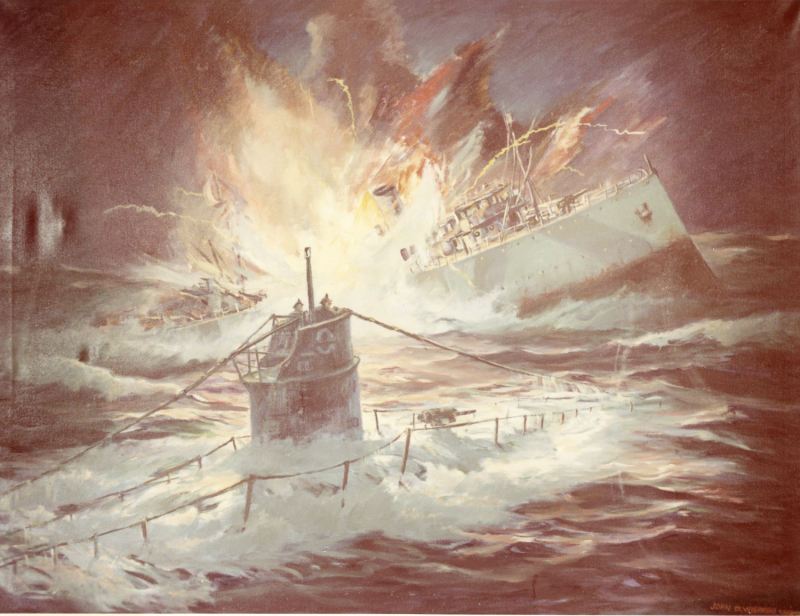
“There were no witnesses, and the submarine resurfaced at 8:25 pm to look for debris and bodies but found nothing. When Tampa did not arrive in port at her expected time, a British seaplane and two Royal Navy PC boats were sent in search of her the following day. The seaplane was the first to spot an eight square mile debris field.” Three U.S. Navy vessels later confirmed the debris.
In 2023, the Coast Guard Historian’s Office was contacted by the Gasperados Dive Team for help researching the Tampa’s fate. The all-volunteer team conducted an extensive search for the wreckage.
“We provided the dive team with historical records and technical data to assist in confirming the wreck site,” said Dr. William Thiesen, the Coast Guard Atlantic Area historian. “This included the archival images of the deck fittings, ship’s wheel, bell, weaponry, and archival images of the Tampa.”
With the discovery of the wreck, the Coast Guard says it is developing plans for an underwater research and exploration effort “in coordination with its offices of specialized capabilities, historians, cutter forces, robotics and autonomous systems, and dive locker.”