

WorkBoat Header Background Image

WorkBoat+ Membership – Free to Join

  • Login

Newsletter

You may unsubscribe from our mailing list at any time. Diversified Communications | 121 Free Street, Portland, ME 04101 | +1 207-842-5500

  • Home
  • News
    • Bluewater
    • Coastal & Inland Waterways
    • Dredging
    • Maritime Business
    • Marine Technology
      • Design and Naval Architects
      • Power and Propulsion
    • Military
    • Government
    • Passenger Vessels
    • Shipbuilding
    • Subsea
    • Offshore Energy
      • Oil & Gas
      • Wind
    • Video Interviews
    • WorkBoat Show News
  • WorkBoat Show News
  • Viewpoints
  • Significant Boats
  • Media
    • Magazine
    • Videos
    • Webinars
  • Resources
    • Associations & Organizations
    • Brand Partners
    • Jobs & Marketplace
      • Place an Ad
    • Reports
      • The U.S. Dredge Report 2025
      • Construction Survey 2025
      • Diesel Directory 2025
      • Outboard Directory 2024
    • Significant Boats
    • WorkBoat+ Membership
    • Workboat Composite & Stock Index
  • Events
    • International WorkBoat Show
    • Underwater Intervention
    • Pacific Marine Expo
  • Magazine
    • Current Issue & Digital Archives
      • Digital Edition: WorkBoat +Tech
        • Digital Edition WorkBoat +Wind
    • Magazine Subscription Information
  • Jobs & Marketplace
    • Employment
    • Legal & Attorney
    • Marketplace & Services
    • Place an Ad
  • About
    • About WorkBoat
    • Advertise & Media Kit
    • Authors
    • Associations & Organizations
    • Contact Us
    • Help

Now Available: The U.S. Dredge Report 2025 — download today for expert dredging market insights and data → Click Here

Gold

October 20, 2020

Performing a VHF marine radio check

U.S. Coast Guard

  • Viewpoints

SHARE

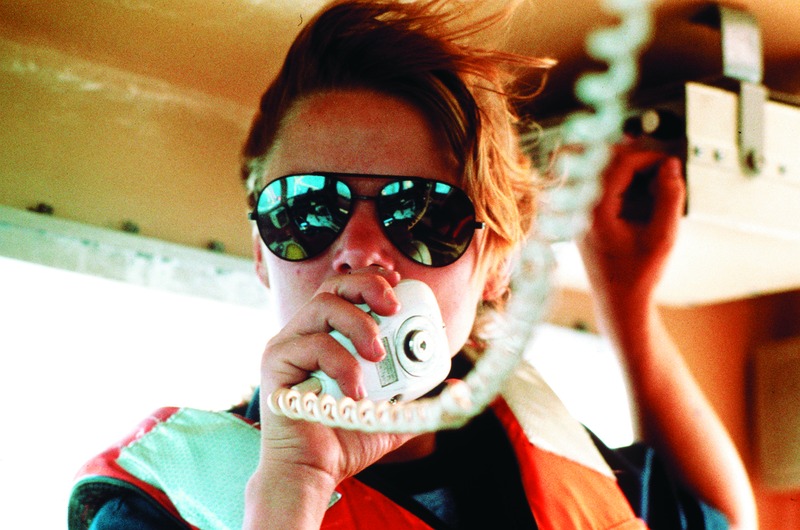
VHF radio technology has come a long way in the past 20 years.
U.S. Coast Guard photo
The Coast Guard Inspections and Compliance Directorate has issued MSIB 20-20 to inform mariners of the proper procedure for performing a VHF radio check.

Sea Tow Automated Radio Check System no longer available:

For several years, Sea Tow operated an Automated Radio Check System, which was available on VHF Channels 24 to 28 for the benefit of mariners in over 130 locations. However, on Oct. 2, 2020, that service was discontinued.

How to test a VHF Radio using Rescue 21:

The U.S. Coast Guard continues to offer an automated digital selective calling (DSC) test call capability from each of its Rescue 21 coastal stations. All fixed mount marine radios certified by the Federal Communications Commission since 1999 are required to have a DSC capability. All such radios sold since 2011 must also have a DSC test call capability. Marine radios transmitting and successfully receiving a response from a DSC test call can be expected to operate acceptably in the voice mode as well.

To perform a DSC test call, enter the Coast Guard’s coast station group identity “003669999” into the radio’s DSC memory. Once entered and stored, a DSC test call can be made by executing the following three steps:

  1. Select “Test Call” from the radio’s DSC menu,
  2. Select the USCG number entered into memory, and
  3. Transmit the call.

The radio display should indicate when that test call is acknowledged and display the acknowledging station’s nine-digit identity. That identity may be different than the group identity previously entered into memory.

Please use VHF Channel 09 and do not use VHF Channel 16:

VHF Channel 16 is not for the purpose of radio checks. Please use VHF Channel 09, which has been designated by the FCC as a boater’s calling channel.

Questions concerning this notice may be forwarded to Coast Guard Spectrum Management and Communications Policy Division (CG-672) at [email protected] or to the Coast Guard Navigation Center’s “Contact Us” page by selecting ”Maritime Telecommunications” as subject.

  • Coast Guard

U.S. Coast Guard


Related
Amphibious transport dock ship USS John P. Murtha (LPD 26) underway on the Pacific Ocean, April 8, to support NASA’s Artemis II mission, retrieving the crew and spacecraft following their return to Earth after splashdown in the Pacific Ocean. Navy photo by Mass Communication Specialist 3rd Class Elyssia Rodriguez.
April 10, 2026

Navy dive medical team to support Artemis II splashdown recovery

U.S. Coast Guard Cutter Kukui (WLB 203) crewmembers prepare to hook a navigation buoy near Sitka, Alaska, March 2026. Coast Guard photo by Ashly Murphy.
April 10, 2026

SOCP releases updated SASH training program for US mariners

Senesco Marine's arc welder, purchased with a Small Shipyard Grant, can weld two 40'x40' plates together in about 90 minutes. It would take a person three to four days to do the job. Ben Hayden/WorkBoat photo.
April 10, 2026

Trump budget proposes $105 million for small shipyard grants, $250 million for new program

Become a WorkBoat+ Member

  • Resources
    • Brand Partners
    • Jobs & Marketplace
    • Reports
    • Webinars
    • WorkBoat Composite & Stock Index
  • About
    • The WorkBoat Brand
    • Advertise & Media Kit
    • Authors
    • Associations & Organizations
    • Contact Us

Our Events

Diversified Communications
Privacy Policy DSAR Requests Terms of Use Locations Events, Products & Services
© 2026 Diversified Communications. All rights reserved.