



California Gov. Gavin Newsom has certified the Berkeley Water Transportation Pier Ferry Project for expedited judicial review under Senate Bill 149, a step intended to shorten potential legal delays for a planned all-electric ferry connection in San Francisco Bay.
The project, a partnership between the City of Berkeley and San Francisco Bay Ferry, would replace the long-closed Berkeley Municipal Pier with a new dual-purpose recreational and ferry facility. Planned service would connect Berkeley with San Francisco and Larkspur.
The certification does not authorize construction or eliminate environmental review. Instead, it establishes a streamlined process for resolving legal challenges under the California Environmental Quality Act. The project remains in its design and environmental phase, which Berkeley expects to complete in 2027.
Plans call for a 1,080' dual-purpose pier, a 400' breakwater, ferry boarding facilities, ADA-accessible gangways and charging infrastructure for zero-emission vessels. The project would also include plaza and landside improvements around the Berkeley Marina.
Project materials put the estimated total cost at approximately $104 million, including about $79 million for the pier and ferry terminal and $25 million for landside and plaza improvements. About $11.1 million has been secured for design, engineering and environmental review, while construction funding has not yet been identified. Berkeley says the current phase is supported by grants and allocations from the Alameda County Transportation Commission, California State Coastal Conservancy and Water Emergency Transportation Authority.
The city published a draft environmental impact report Feb. 27, with public review concluding April 28. Berkeley is now responding to comments while continuing detailed design, permitting and environmental work.
At full buildout, state officials estimate the ferry project could remove approximately 19,000 vehicle miles per day from Bay Area roads. Project materials also project more than 1,000 average weekday ferry passengers.
“This project shows what’s possible when multiple benefits work in sync to create something exceptional to meet community needs for a healthier environment and greater resilience to a changing climate,” said Samuel Assefa, director of the Governor’s Office of Land Use and Climate Innovation. “The CEQA judicial streamlining certification is a demonstration of California’s innovative approach to delivering needed infrastructure more expeditiously while protecting resources.”
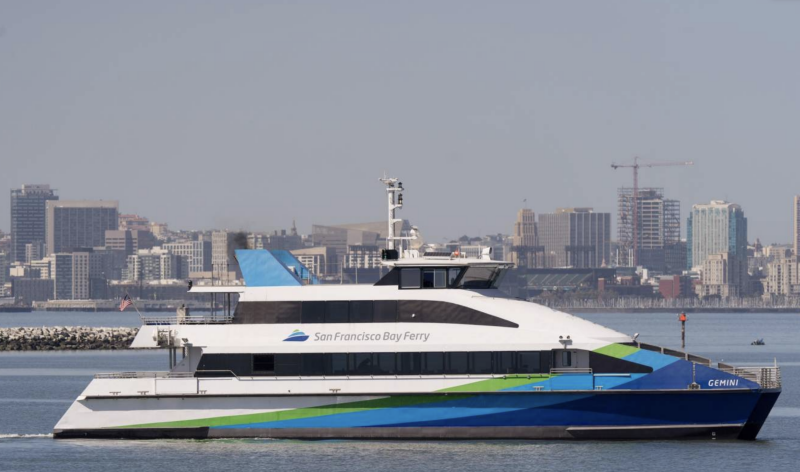
The Berkeley project is part of a broader San Francisco Bay Ferry expansion that includes development of battery-electric vessels and shoreside charging infrastructure. Earlier WETA planning documents identified Berkeley as a future electric-ferry route serving San Francisco and Larkspur.
Newsom announced the certification the same day the House voted 214-208 to approve H.J. Res. 213, a Congressional Review Act resolution targeting federal authorization of California’s Commercial Harbor Craft emissions requirements.
