


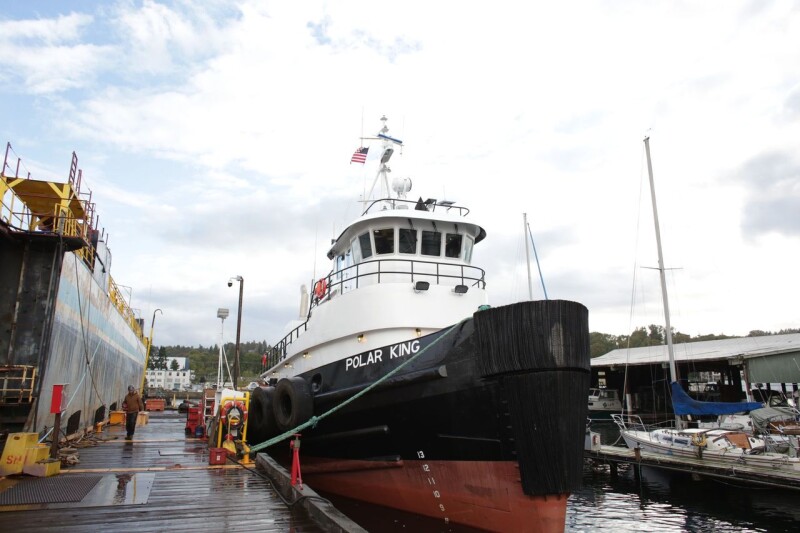
After 17 months of intensive shipyard work, the 120'x34' Polar King tug is back in service following a comprehensive overhaul that effectively rebuilt the 50-year-old vessel from the hull up. The refit returned the formerly laid-up tug to active-duty, towing barges between Seattle, Hawaii, and ports across Western Alaska.
The vessel is owned by Lynden Inc. subsidiary Alaskan Marine Lines (AML), and is leased to Dunlap Towing Co. Built in 1974 at McDermott Shipyard, Polar King is one of eight sister vessels constructed that year. Four of those vessels ultimately entered service with Alaska Marine Lines.
The overhaul included new equipment throughout the vessel, rebuilt main engines and reduction gears, and fully updated hydraulic systems, valves, piping, electronics, wheelhouse, and winches. A key redesign feature allows the tug’s main engines the ability to be removed and installed vertically through the deck, simplifying future maintenance.
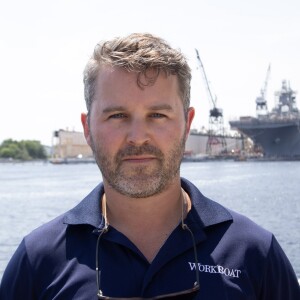
Eddie Protzeller, project manager who oversaw the refit, told WorkBoat the Polar King was selected from AML’s laid-up fleet in part because of its propulsion arrangement. “The reason why this boat was chosen is because it has Nautican nozzles and triple rudders on it… AML has three other ones that are all sisters, and they are open wheel with single rudders.”
Protzeller said the Nautican nozzle and triple-rudder configuration offers advantages for long-distance towing despite some loss of speed. “You lose a little bit of your speed free running, but… you're just so much more efficient when you're working a long tow like that with Nautican nozzles and the triple rudders for handling the barge alongside.”
The scope of the refit amounted to a near-total mechanical teardown. “We took the boat, removed everything out of it… the only thing that was left in it was the foundation or the bottom portion of the gearboxes were removed and reconditioned,” Protzeller said.
“But all the shafting was taken out, we rebuilt rudders and reconditioned the main engines, the 3606s, which were already upgraded to an electronic version through AutoMaskin, and we removed those out.”
The tug’s twin Caterpillar 3606 main engines were rebuilt rather than replaced. Protzeller said the engines now functionally align with CAT C280-series specifications due to their AutoMaskin electronic control upgrades. “It's the AutoMaskin version of CAT’s C280,” he said. Total main engine output is approximately 5,000 hp. The Lufkin RHSQ2524 reduction gearboxes were retained but fully rebuilt.
Two new John Deere 6068AFM85E diesel engines were installed as gensets. Each engine drives both a generator and a hydraulic pump fitted with an electric clutch. On the hydraulic side, either port or starboard unit can supply house power while the other runs hydraulic loads for deck machinery. “So they're the same engine. One can be running house power and the other can run the headline winch or tow winch,” Protzeller said.
Controls were upgraded with existing rebuilt Mathers air controls, and the vessel received an all-new electronics package from Lunde Marine, Seattle.
The refit also included installation of a Lantec 540 headline winch and a GSM-800005-D towing winch, replacement of all shafting, and conversion from water-lubricated shafts to oil-lubricated shafts. With babbitt bearings, the oil-filled system eliminates routine shaft withdrawals for inspection unless damage occurs. “Unless you break a shaft or bend one or go aground… the shafts can stay inside,” Protzeller said. "Seawater no longer contacts any portion of the shaft."
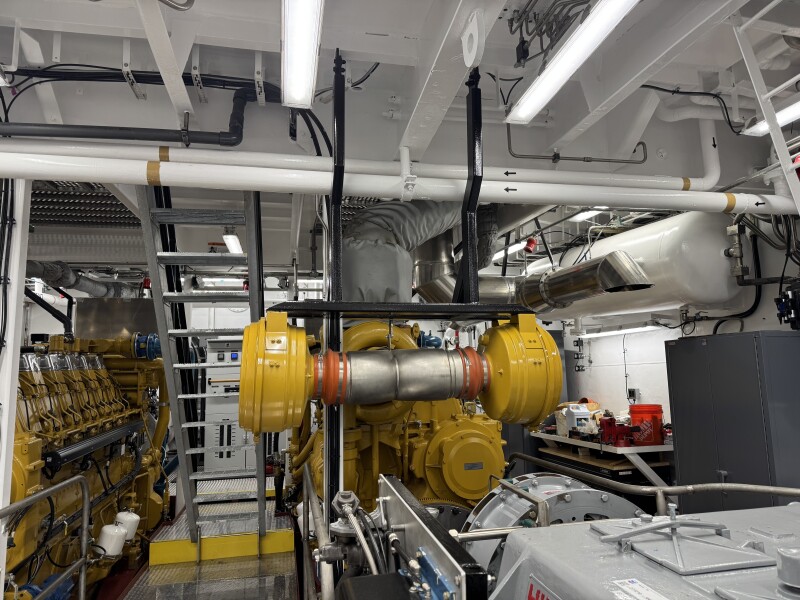
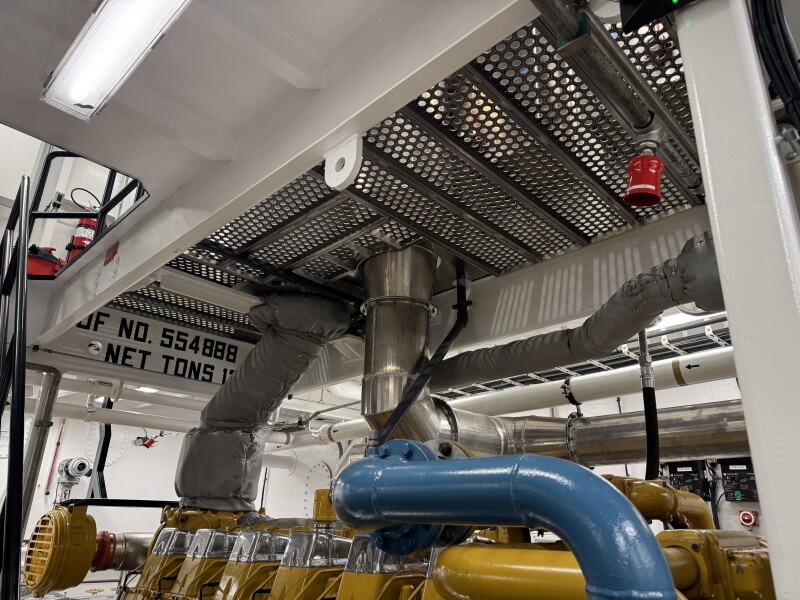
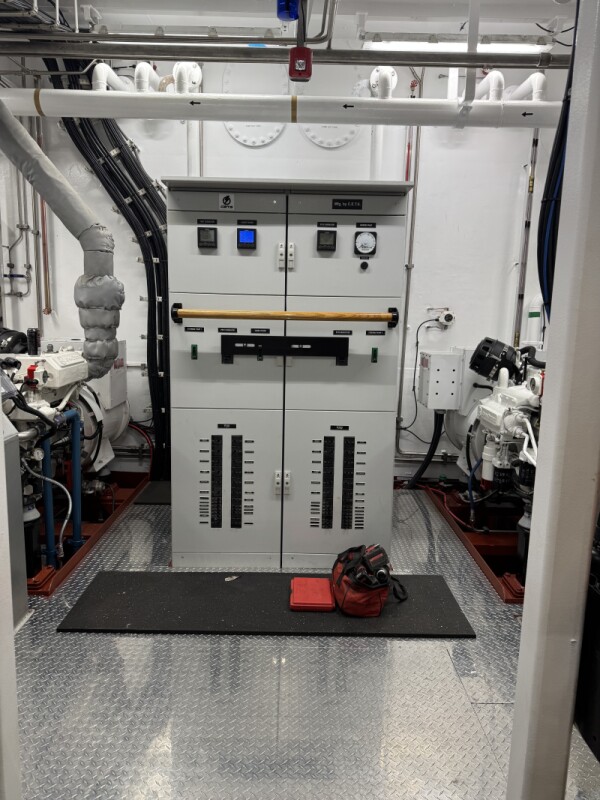
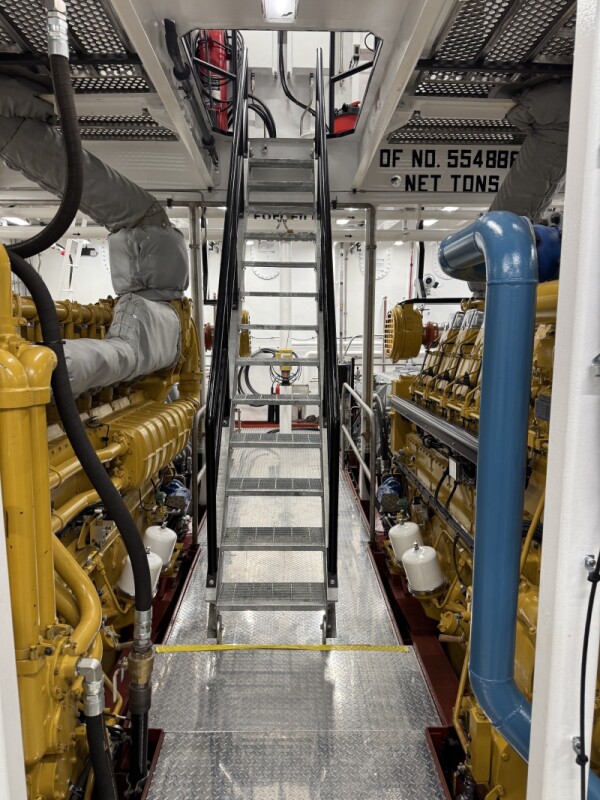
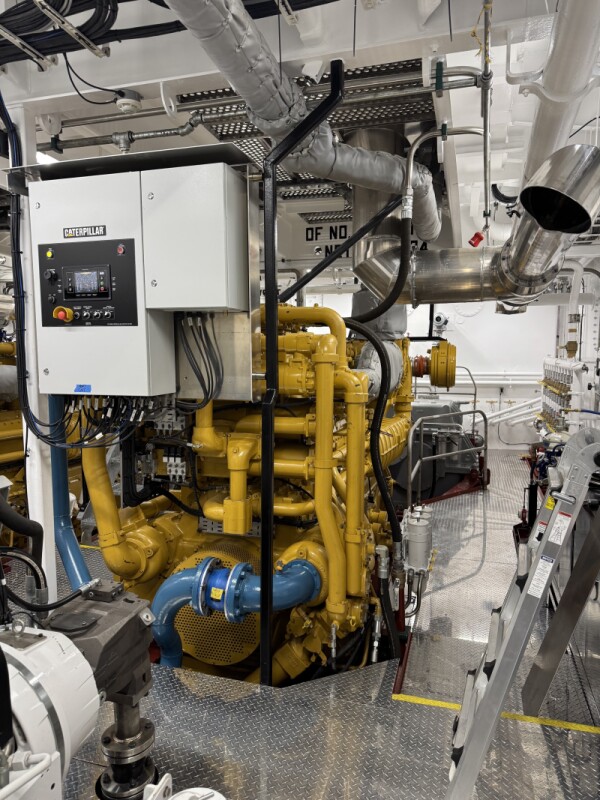
Fringe-type keel coolers were retained for the main engines and gears. “We kept the fringe trim coolers… because the main engines…are still the same and the gears piggyback off the main engine,” he said.
To manage torsional loads, the propulsion system was fitted with custom torsional vibration couplings. “Centa custom made a set of torsional vibration couplings for us… they’re expensive, but they’re the best out there for torsional vibration for trying to handle that kind of load. We had Centa run a new torsional vibration analysis to optimize the couplings and not cause any thrust against the crankshaft."
KEEP IT SIMPLE
Protzeller said a guiding principle of the refit was operational simplicity achieved through mirrored systems and redundancy. Fuel and ballast tanks that previously relied on sounding tubes were upgraded with sight glasses, allowing crews to visually monitor tank levels during fueling. Non-rising-stem valves were replaced with quarter-turn valves to reduce the need for tools and minimize fueling errors.
Steering pumps and motors were standardized so either unit can deliver the same flow rate. The steering system includes both autopilot and jog solenoids, with a manual bypass that allows the autopilot circuit to take full control if the jog solenoid fails. “You can open the orifice valve on the autopilot side and then make that your hundred percent again.”
“We tried to mirror everything so that you have simplicity through redundancy,” Protzeller highlighted.
Initial demolition began at Northlake Shipyard, with Stabbert Maritime personnel performing ABS- and Coast Guard-required steel repairs. Interior finish work was completed by Pipes Carpentry of Seattle, a father-and-son team with more than four decades in the trade.
At the height of the refit, approximately 30 workers, including multiple vendors, were on site six days a week. AML Port Engineer Kris Mullan was also involved in the project oversight.
CREW COMFORTS
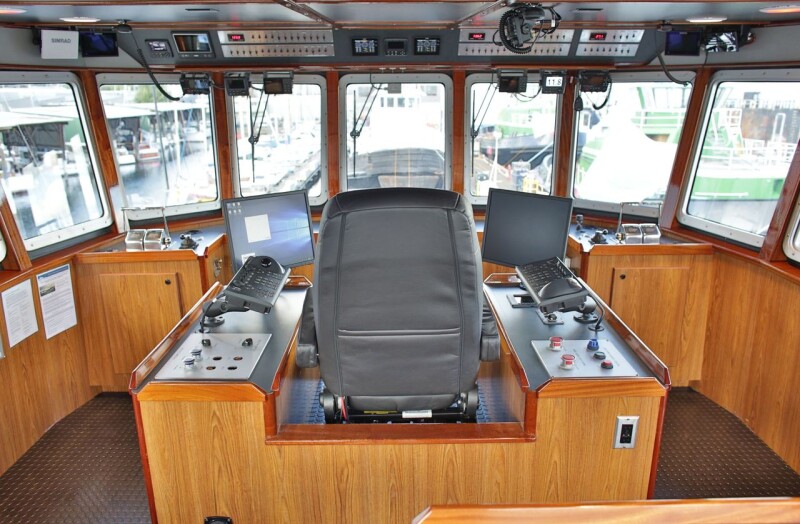
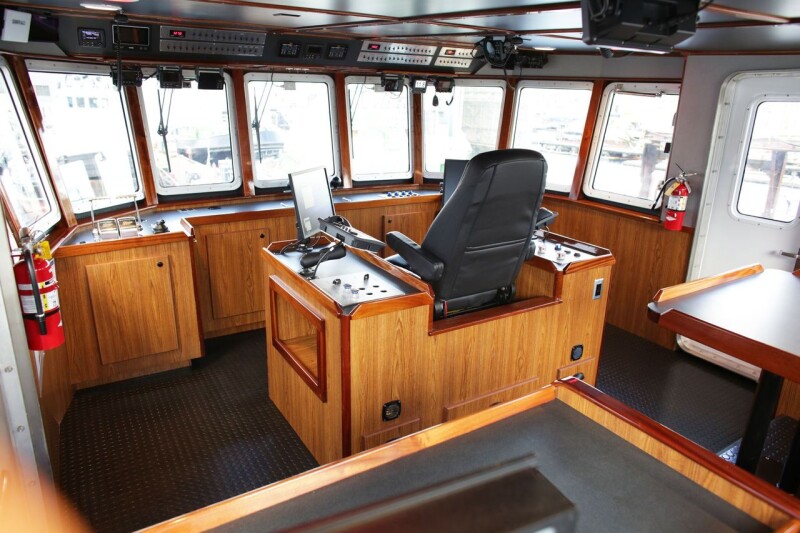
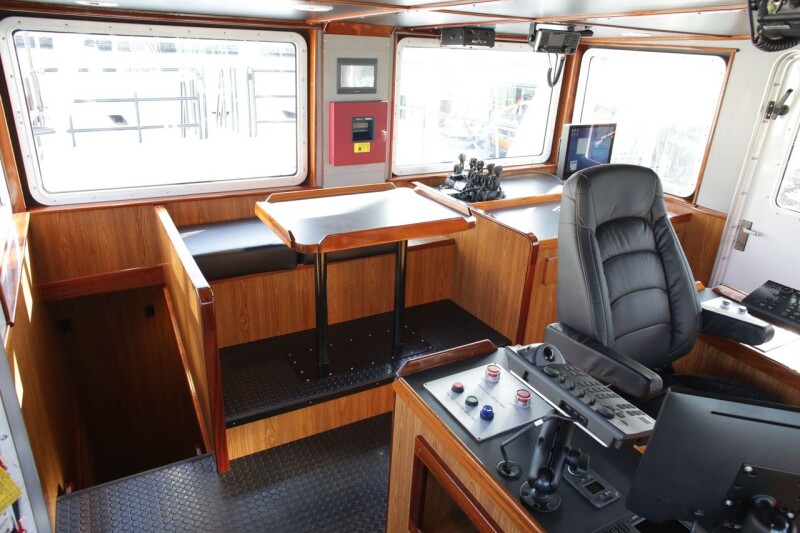
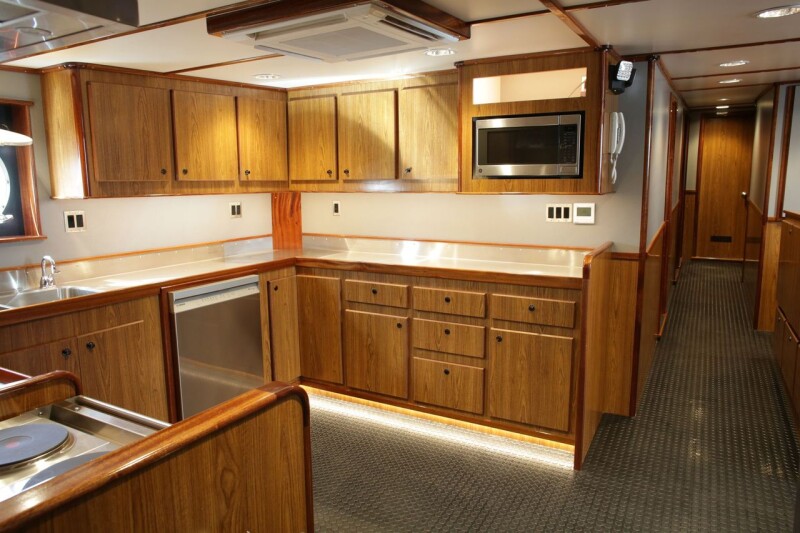
Crew habitability was a major design driver, particularly for longer ocean runs. The vessel now accommodates eight crewmembers in six staterooms. The galley was redesigned into an open-concept layout, and the wheelhouse was completely rebuilt with new windows that follow the vessel’s sheer, Protzeller said. Two large aft-facing picture windows and expanded side windows dramatically improved visibility allowing you to tow wire and tow pins from the wheelhouse with the exhaust stacks separated.
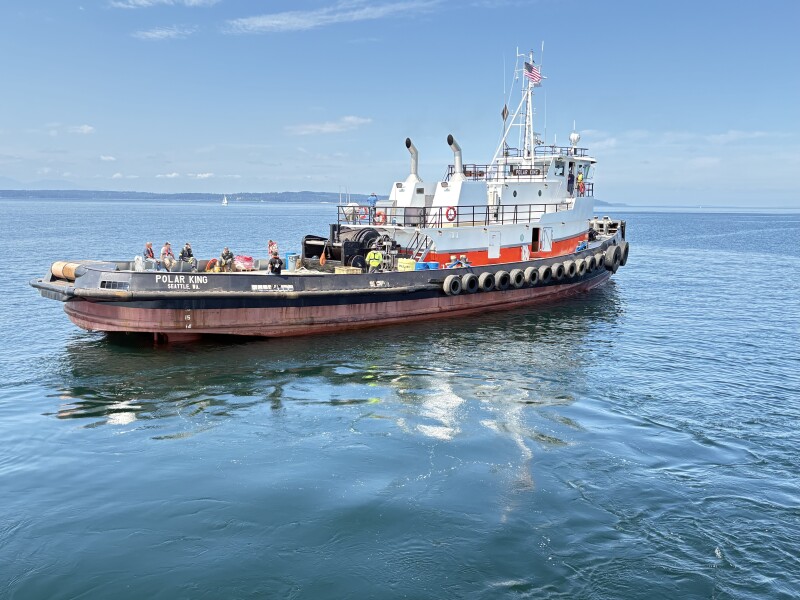
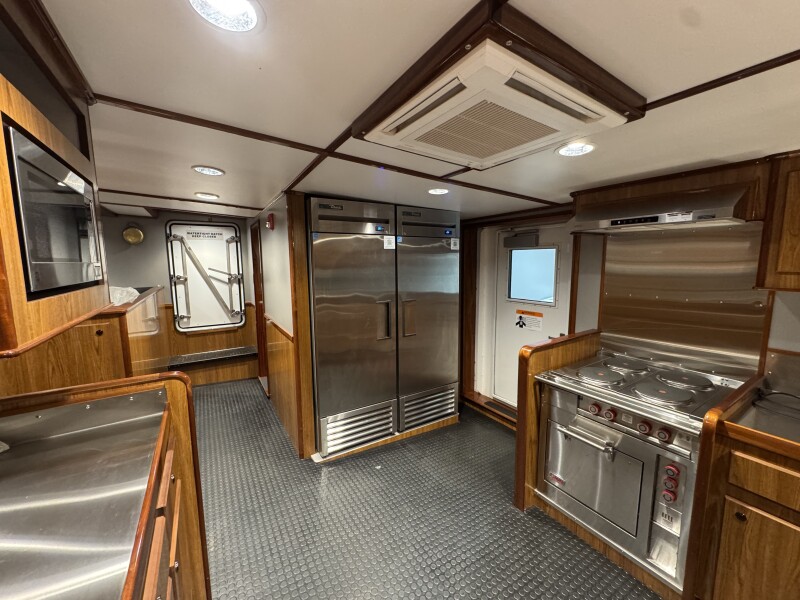
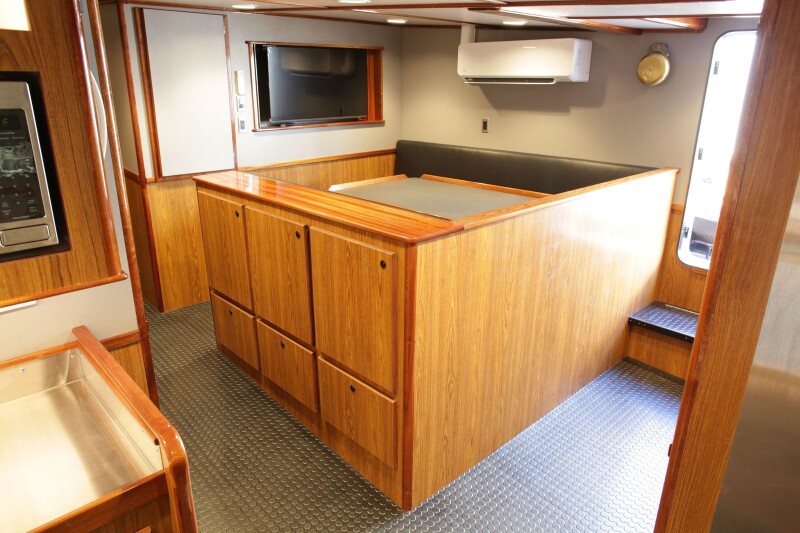
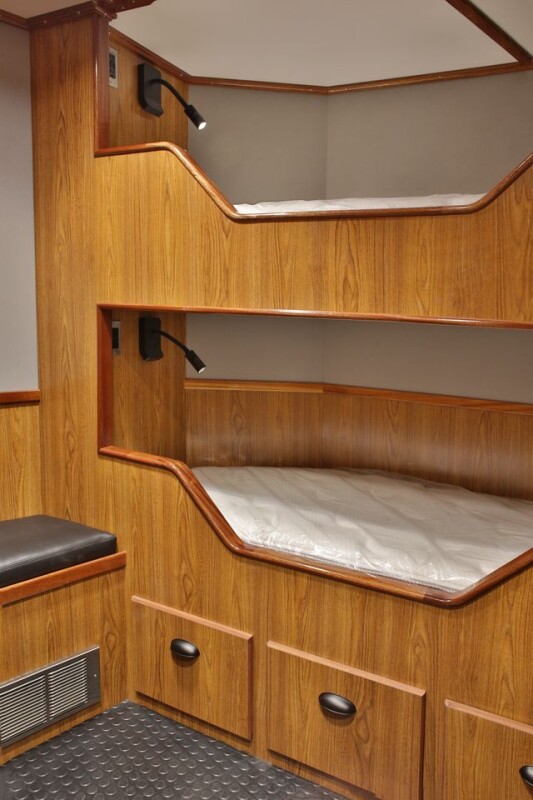
“The wheelhouse looks like a whole new boat… the boat looks totally different from just the different windows that are on it,” he said. Fabtek supplied the window and door package.
The helm is centered around a single captain’s chair with consoles arranged for long-haul towing. Displays, keyboards, and electronics are mounted high and undermounted to keep sightlines clear. “So you have… nothing in the way of your visibility,” Protzeller said. “You can turn your head around and you can see all your tires down the side of the tug… you don't have any blind spots.”
The Subchapter M-compliant tug, can cruise under tow at nine-to-10 knots at 900 rpm and has a bollard pull rating of 80 tons.
At the time of writing, Polar King is currently conducting service on AML’s Hawaii trade and will work the Red Dog Mine run in northwest Alaska during the summer. The tug’s return restores one of AML’s original McDermott-built vessels to active duty with modern systems, simplified maintenance, and upgraded crew accommodations.
“Having a boat that you're proud of puts a whole new level on the day to day… work ethic of everyone on there,” Protzeller said.
