


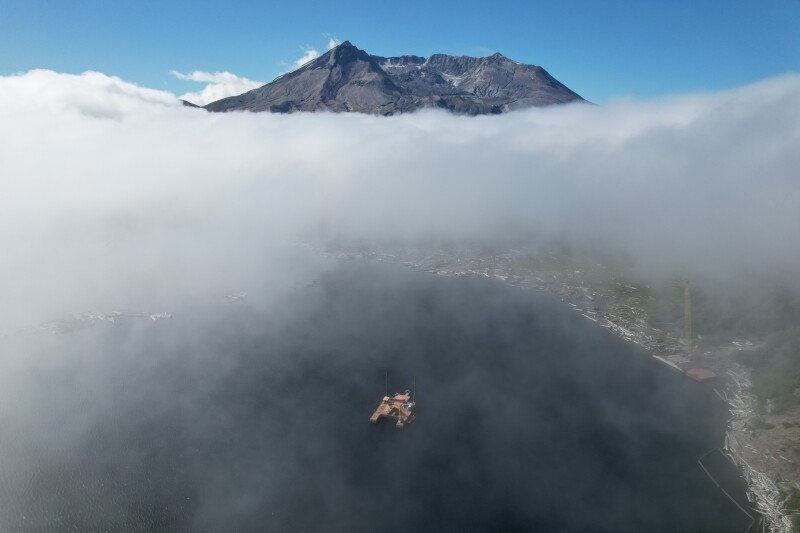
Advanced American Construction, Portland, Ore., is entering the third construction season of a four-year project for the U.S. Army Corps of Engineers at Spirit Lake near Mount St. Helens, where crews are rebuilding critical outlet infrastructure designed to prevent flooding downstream from the volcanic lake.
The project centers on the rehabilitation of the Spirit Lake outlet works and tunnel system originally constructed by the Corps in the 1980s following the eruption of Mount St. Helens. AAC President Dee Burch told WorkBoat the company was awarded the contract in early 2023 and is now preparing for the largest phase of construction.
“It’s a four-year project, so we’re going into the third season of it,” Burch said. “This season’s work is the huge majority of the actual rebuilding of the outlet works.”
The Spirit Lake outlet system was constructed after the 1980 eruption blocked the lake’s natural drainage path with volcanic debris, ash, and timber. Without intervention, rising lake levels threatened downstream communities with catastrophic flooding.
“The Corps of Engineers went in and installed a tunnel and an outlet works where they built a concrete outlet works and they drilled a tunnel so that they could regulate the water and not let the water get too high in there,” Burch said. “It’s really an accomplishment for the Corps to have designed that and had it worked for this long with virtually no maintenance.”
AAC has a long history working with the Corps, which Burch described as the company’s largest client since its founding in 1983.
“The Corps of Engineers is the client that we do the most business with,” Burch said. “We’ve done a multitude of work with them and we’re very familiar with their systems and their procedures and their rules and the federal acquisition regulations.”
Burch said the complexity of the multi-year assignment required careful planning before bidding.
“If we’re going to bid on a four-year job we want to make sure that we really understand it completely because there’s nothing worse than making a mistake and then having to live with it for four years,” he said.
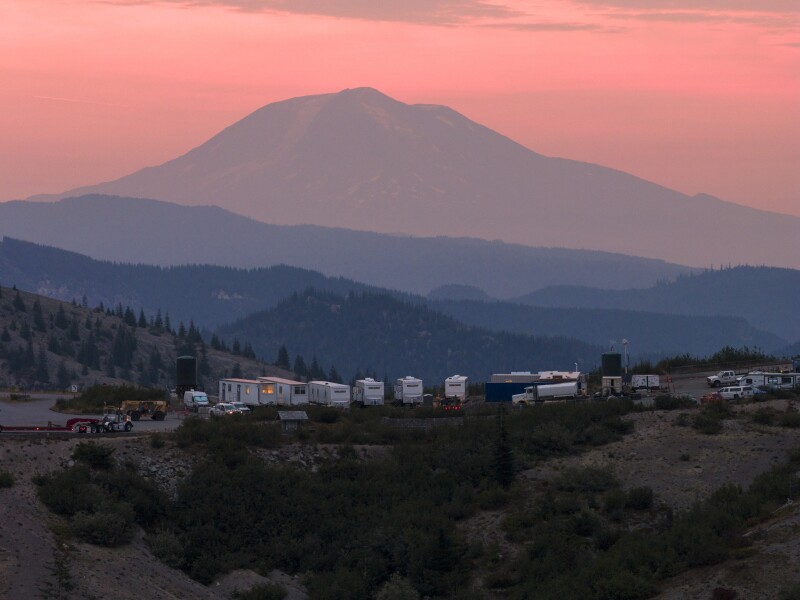
One of the project’s biggest logistical challenges has been access. The work site is only reachable through a three-and-a-half mile temporary access road built along steep switchback logging terrain. Due to environmental restrictions and seasonal snowpack, crews have only about four months each year to work.
“The only way to really work that job and take advantage of the four months is to set up a camp up there,” Burch said.
AAC partnered with Tapani Inc., Battle Ground, Wash., to construct and maintain the temporary roadway and crossings needed to support the project. Under permit requirements, the temporary infrastructure must be removed and the area restored at the end of every season before crews rebuild the access system the following year.
“At the end of every four-month work window we’re required to basically put everything back the way it was,” Burch said. “Then when we come back eight months later, we have to put it all back in again. We have to do that four times.”
The first season focused largely on constructing the access route. During the second season, AAC crews dredged sediment around the outlet structure to expose the infrastructure for repair work.
“We dredged material there so that we could get at the outlet works because it had silted in around it,” Burch said. “The Corps was very concerned about that, so we had to get all that material out of there so we could access the outlet works.”
This season will focus on rebuilding the outlet works structure itself.
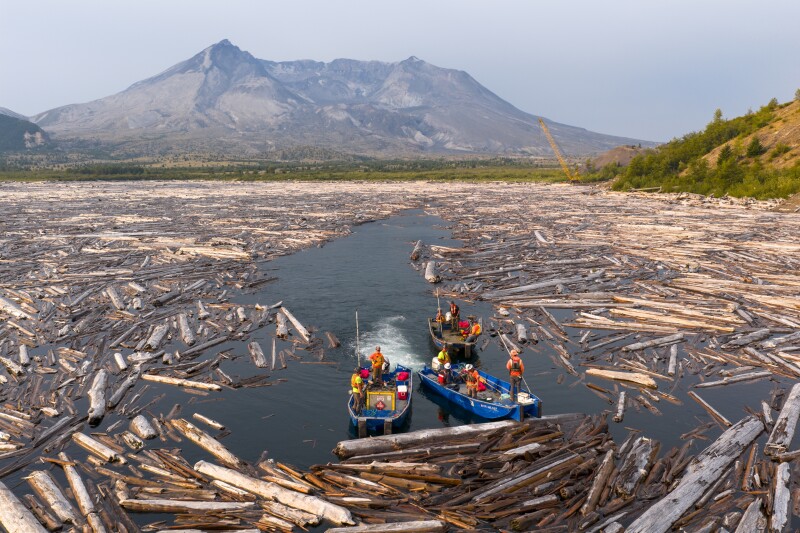
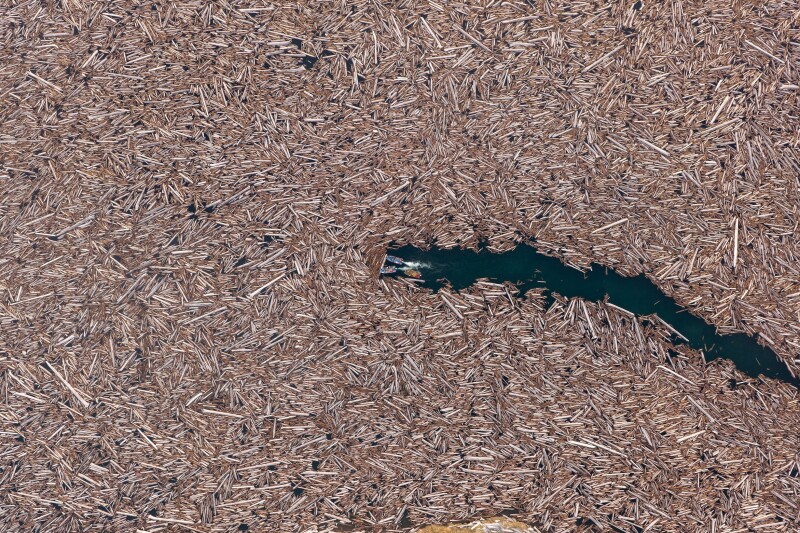
The project has also required crews to navigate around Spirit Lake’s massive floating log mat, a remnant of the Mount St. Helens eruption. The logs shift across the lake depending on wind conditions, often complicating access to the work area.
“The log field moves from one end of the lake to the other, from side to side, it goes wherever the wind blows,” Burch said. “At times it makes it very difficult for us to get to our work.”
Environmental restrictions prohibit crews from permanently clearing or containing the log mat.
“We’re able to go in and clear enough to get our work done, but we’re not allowed to go in and clear a big area and put a log boom up and just keep it away from us,” Burch said.
AAC is using modular Flexifloat sectional barges manufactured by Robishaw Engineering in Houston. The barges are trucked to the site in sections and assembled on location.
“They kind of pin together like Legos,” Burch said. “You can make any configuration you want with them.”
Crews and subcontractors are housed at a temporary camp established near the project site, an arrangement Burch said has created a unique working environment for personnel involved in the remote operation. Given the remoteness of the project, Burch said crews we're volunteer driven.
“It’s almost like being back in summer camp,” Burch said. “You’re up there in this incredibly beautiful place and there’s nothing else to do but work and interact with the other people up there.”
When asked where the Spirit Lake rehabilitation ranks among AAC’s most difficult projects, Burch said it falls within the company’s top 10.
“We’ve done some incredibly challenging, difficult projects with ridiculous timelines and lots of environmental restrictions,” he said. "That’s kind of our specialty. But it’s definitely in the top 10 and one we’re incredibly proud of.”
