



ABS and Lomar Labs have signed a master research collaboration agreement to evaluate early-stage technologies designed to reduce vessel emissions, improve fuel efficiency and automate maritime operations.
The agreement establishes a framework for the organizations to provide technical expertise and advisory services to technology startups. The work will support the research, development, testing and qualification of new systems for maritime applications.
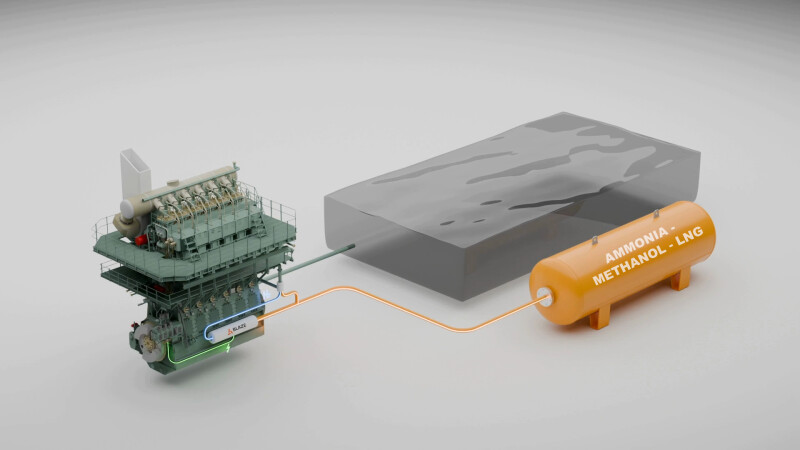
The first project under the agreement involves Blaze Energy, which is developing a compact, engine-integrated fuel reformer intended to support the use of alternative fuels aboard commercial vessels.
Blaze Energy said the collaboration will provide a structured path for moving its Flex-Fuel Reformer from laboratory testing to deployment aboard a pilot vessel and, ultimately, regulatory approval.
“The most important step toward commercial deployment for maritime hardware technology is moving from lab-proven to vessel-proven — demonstrating performance under real operating conditions at sea,” said Rok Sitar, CEO and co-founder of Blaze Energy.
ABS will apply its New Technology Qualification process to evaluate the technology’s design, performance and readiness for maritime use. The classification society said the process is designed to identify technical risks and potential design improvements early in development.
“At ABS, we’ve built deep expertise in evaluating and qualifying novel technologies across the marine and offshore industries,” said Patrick Ryan, senior vice president and chief technology officer at ABS. “For early-stage technology companies, that’s an important advantage.”
Stylianos Papageorgiou, managing director of Lomar Labs, said collaboration among technology developers, regulators, flag administrations and classification societies is increasingly important as maritime technology advances faster than existing rules and standards.
“By working together, sharing lessons learned and iterating as technologies mature, we can develop robust standards that support innovation while maintaining the highest levels of safety, environmental protection and operational integrity,” Papageorgiou said.
