



The decision has been made: Washington State Ferries is going to Florida for new boats.
Earlier this month, Eastern Shipbuilding Group in Panama City was selected over Nichols Brothers Boat Builders in Freeland, Wash., in a bidding competition. This will be the first time in about 50 years that an out-of-state yard will build new vessels for the state-run ferry service.
The decision is a huge disappointment for NBBB, which had been lobbying for at least a split decision: two boats for Florida, two boats for Washington. But no, not only does Florida get the work, we Salish Sea ferry riders now only get three new boats.
WTF?
At one time, not long ago, there were to be five new hybrid boats and three converted hybrid boats to quickly kick off a fleet electrification program. In 2020, the state transportation department put out an ambitious plan to create a fleet of all electrified ferries by 2040. That would have included conversions of all three Jumbo Mark II boats, the initial construction of at least five, and then 16, new battery-powered Olympic-class boats, and a few other conversions. From the WashDOT 2040 Long Range Plan: “By 2040, the WSF fleet would consist of 26 vessels, three more than the current fleet, including a larger relief fleet and additional service vessels.” And shoreside charging stations, too.
Not gonna happen.
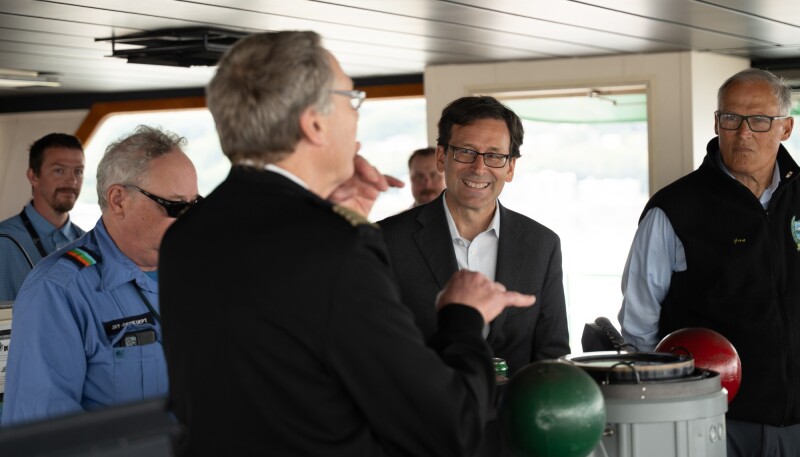
However, the conversion of the Wenatchee, a 202-car Jumbo Mark II is finally complete, after about $130 million and nearly two years of work at Vigor Shipyard's Seattle facility that included numerous other refurbishments and repairs. Not one, but two governors (Inslee and Ferguson) rode the boat in Elliott Bay in early July, and the ferry was scheduled to start limited service a few weeks after.
Getting the Wenatchee back to work is very good news. Its return is a key part of WSF’s push to get service back to pre-pandemic levels this summer. Routes that had been cut from two-boat service to one have been restored. Same for a three-boat triangle run.
Ferry riders in Washington have really suffered over the past three or four years. We’ve been left sitting in lines for hours. We’ve shown up at the docks only to be told that the scheduled boat wouldn’t be operating because of insufficient crew numbers. Boats have broken down without any relief boats available to fill in.
Ferry workers have suffered, too. Many have worked extra days to help fill Coast Guard-required manning. Dispatchers have worked the phones tirelessly to find the necessary crew. Fleet managers and engineers have torn out their hair trying to keep the aging fleet operational for the millions of people and vehicles that depend on their services every day, and ferry chief Steve Nevey has initiated a comprehensive plan to fill the ranks from the engine room to the wheelhouse.
I don’t blame Gov. Ferguson for going with Eastern. Its bid was many millions less than NBBB’s. The Washington yard was given a 13% credit to account for higher costs here in the Upper Left Corner, but NBBB blew way past that. Yes, keeping the money in state would have been ideal, but the state legislature opened up bidding to out-of-state yards for good reasons: more competition and lower prices.
And while the electrification program isn’t happening at the pace once imagined, it’s underway. We now have a very large ferry with very large battery banks that will operate much more cleanly and efficiently than before, especially after shore power becomes available. Making the transition from diesel power to electric power is the right thing to do, and I applaud the state for doing it. I look forward to seeing the first hybrid-electric, 160-car ferry from Florida arrive in Washington and plug into some clean power.
