



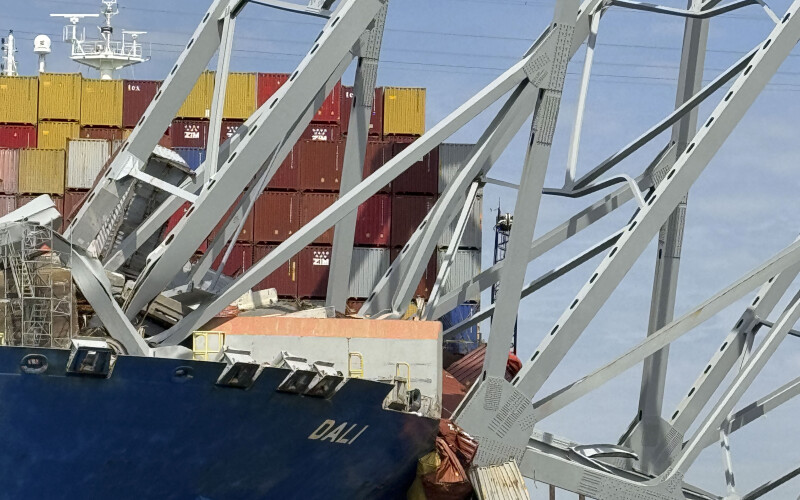
The containership Dali made news headlines when it struck the Francis Scott Key Bridge in March 2024, resulting in a catastrophic collapse of the bridge. A bridge allision that occurred about a year earlier involving the Mackinac Bridge in Michigan makes for a very different legal analysis, despite both incidents involving vessels hitting bridges.
The Dali suffered loss of propulsion and electrical power, resulting in a tragic loss of life and bridge rebuild costs estimated at around $1.8 billion. In contrast, the Mackinac Bridge accident involved an error in judging air draft, mercifully resulting in no injuries and bridge damages of $145,000.
With the Key Bridge, attorneys for the containership invoked a maritime law historically used to cut a shipowner’s losses, known as limitation of liability. To succeed in limiting liability to the post-accident value of a ship, attorneys generally argue that factors causing the accident were not within the owner’s control. The NTSB’s investigation of the Dali’s plant, electrical system, and tripping of circuit breakers is very detailed, beyond the scope of this article. However, the point is that complex propulsion/electrical failures in general could sometimes be argued in various ways, from unseaworthiness to unpredictable event.
In contrast, a setting that points to voyage planning, as in the case of the Mackinac Bridge accident, offers less leeway in terms of arguing that something was not within the control of vessel interests — the pivotal legal issue in successfully invoking limitation. Limitation of liability was granted in the Titanic sinking, but the world was a very different place when the ill-fated White Star liner sank in 1912. I don’t think we’d see such an outcome today.
When the City of New York tried to use limitation law in the aftermath of the tragic Staten Island Ferry crash of Andrew J. Barberi in 2003 that claimed 11 lives, it was unsuccessful. This was because the NTSB felt that the accident was due to the city’s poor oversight of its ferry fleet and a failure to provide safety measures.
The point is that between two different bridge accidents that might appear similar in terms of a news headline (vessel hits bridge), the maritime laws that apply could be very fact-specific, depending on the causes of the accident.
