



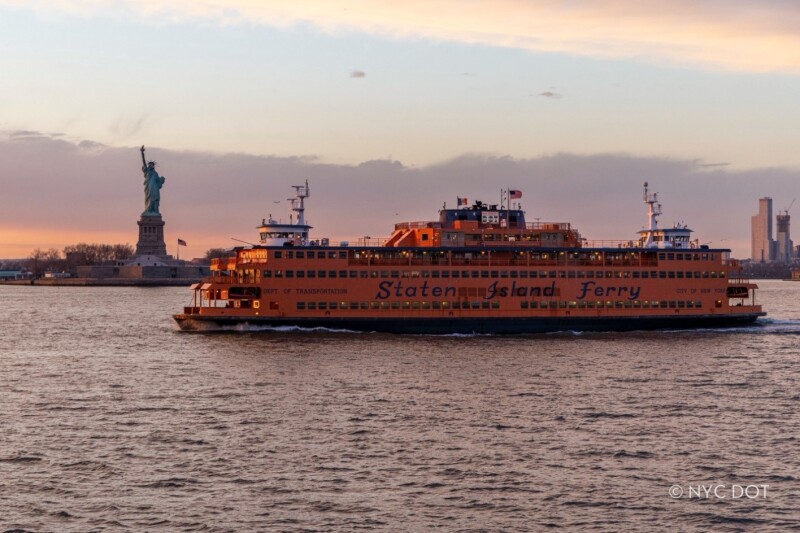
New York City’s Staten Island Ferry is making a full transition from petroleum-based diesel to biofuels in a move aimed at reducing the fleet’s environmental impact.
The NYC Department of Transportation (DOT), which operates the iconic ferry system, began testing hydrogenation-derived renewable diesel (HDRD) in October 2024 aboard the Sen. John J. Marchi, in partnership with the Department of Citywide Administrative Services (DCAS). These tests followed earlier trials with the city’s heavy-duty vehicle fleet.
To date, more than 1.1 million gals. of renewable diesel — made primarily from waste cooking oil and tallow — have been used across the Staten Island Ferry fleet, the DOT said, noting that its engine inspections revealed reduced carbon buildup compared to when ultra-low sulfur diesel was used.
“In March, DCAS finalized a new fuel contract to support this transition, marking the first renewable diesel contract that references the Argus RD index price for the New York Harbor, ensuring that the fuel aligns with the market value,” the DOT said in June press release announcing it its first barge delivery of HDRD.
The 336,000 gals. shipment signals the start of the ferry’s complete shift away from petroleum-based diesel, the agency said.
The Staten Island Ferry is a free, 24/7 passenger service between Staten Island and Lower Manhattan, carrying about 45,000 riders on an average weekday.
According to the DOT, the ferry service burns roughly 4.5 million gals. of fuel annually, and its switch to renewable diesel cuts the fleet's carbon emissions by 60%, supporting the city’s goal to reduce greenhouse gas emissions from government operations by 50% by 2030.
DCAS is also coordinating with other city departments, including the Department of Environmental Protection, New York City Police Department Harbor Patrol, NYC Parks, and the New York City Fire Department, to test and expand HDRD use in additional marine units.
The city plans to fully transition all municipal vessels to renewable diesel by June 30, 2026.
