



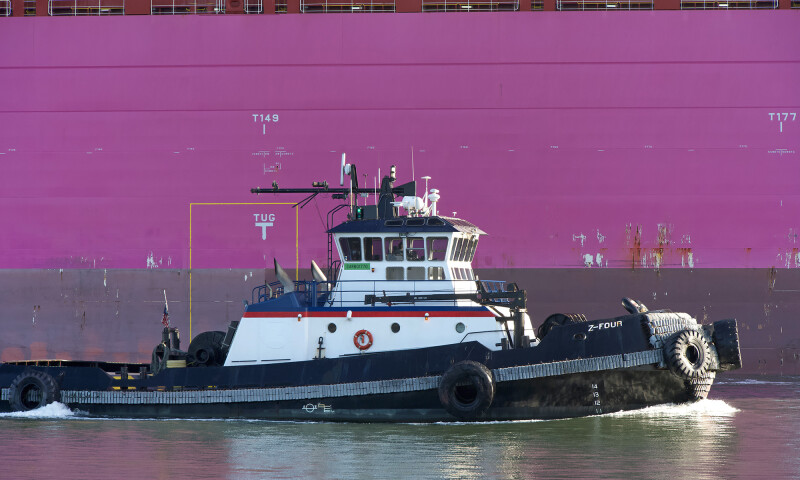
“Will we be putting out a line?” This is a frequent question posed to tug captains and mates by deckhands before doing assists. My standard answer, given before we even get close to beginning a job, is simple and consistent: “I don’t know, and it doesn’t matter.” This isn’t a flippant or “gotcha” answer. It’s a practical necessity.
Why don’t I know? Maybe because my counterpart on the tug and barge we’re assisting doesn’t yet know. Why doesn’t it matter? Because whatever the plan is, it can change quickly — and being prepared for a range of possibilities is essential.
So, the answer is always this: be ready ahead of time for whatever might foreseeably happen, without prompting, and don’t ever be surprised by a curveball. They might want a line — or not. They might start with no line and then have us put one out mid-evolution. Or the other way around. Or we might put out a line, work, take it back in, switch locations or sides, and then put it back out again. It might be on either side — or both. It might be single-part or double (two-part). Lastly, the personnel on the barge or ship may — or may not — throw down a heaving line.
What exactly does it mean to be ready? It’s not complicated. Have at least two lines on deck, coiled neatly for immediate deployment. If you know ahead of time that a two-part line will be used, then pre-rig it; otherwise, be ready to quickly go either way without delay. Have heaving lines — plural — ready to go. That means ready to pick up and throw immediately from where you stand. Not hanging on a hook on the back deck. Not stowed for sea in a locker. Not in a tangled ball somewhere. Not decoratively coiled for hanging on a rail. Ready. To. Throw. Got it?
Now apply this principle to every other deck evolution where seconds can count, and you’re on your way to becoming a real professional.
