


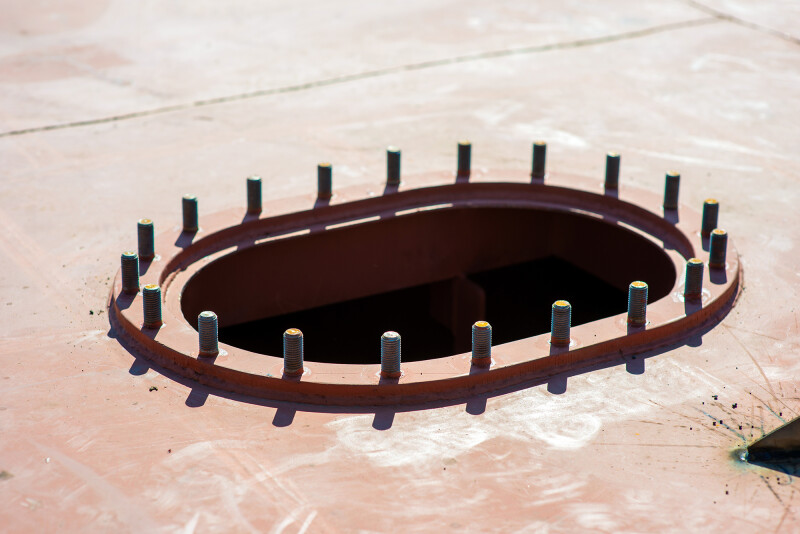
Open hatches can pose safety hazards aboard all vessels, large or small. Falling 4' into a hold brimming with wheat could result in laughs from shipmates. Falling four decks into the cavernous hold of a Great Lakes ore carrier could be the last misstep of one’s life.
During cargo operations, this contrast underscores a critical question: who bears responsibility for the dangers posed by open hatches: the shipowner, the cargo terminal, or crewing contractors? A recent federal case addressed that question.
The case involved a longshoreman who fell through an open hatch on a large containership in Oakland, Calif. His duties included plugging in refrigerated containers to the ship’s power supply as they came aboard. The vessel was “turned over” to the stevedore company (the longshoreman’s employer). According to the captain, this meant that the ship’s crew were to stay clear of areas where longshoremen were working.
After the accident, the longshoreman sued for his injuries under the Longshore & Harbor Workers’ Compensation Act. The ship’s owners argued that the longshoreman failed to show evidence of fault on the ship’s part. The court referred to Scindia Steam Nav. Co. v. De Los Santos, 451 U.S. 156, which outlined three general duties owed to longshoremen.
The first is the “turnover duty.” This requires the ship be turned over in such condition that experienced stevedores could conduct normal cargo operations with reasonable safety by exercising ordinary care.
The second duty is that the shipowner must exercise reasonable care to prevent injuries to longshoremen in areas that remain under the “active control of the vessel.” The third duty was the “duty to intervene,” involving the vessel’s obligations for areas under the main control of the independent stevedore.
The court ruled for the vessel on several points but ruled against it on the “turnover duty” of safe condition and the active involvement duty. The court saw that the yellow warning paint around the hatch was faded. Fresh paint could have been more visible, doing more to prevent accidents.
The decision shows that figuring out who is at fault when people from four or five different companies are crawling all over a vessel can sometimes be a difficult call.
