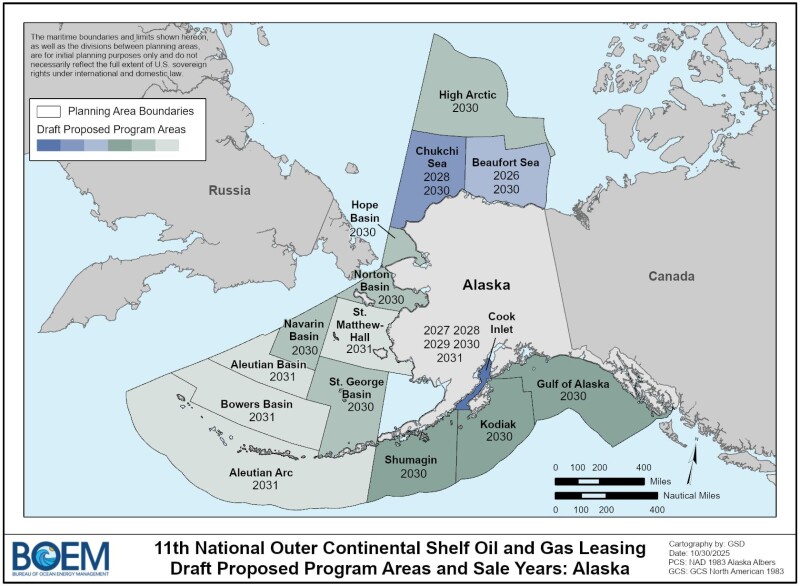
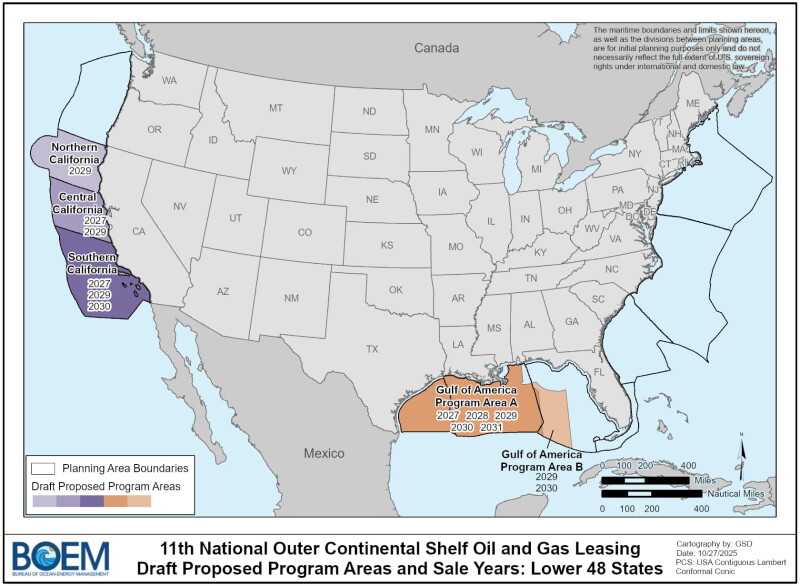
The Department of Interior moved to junk the Biden administration’s 2024–2029 National Outer Continental Shelf Oil and Gas Leasing Program, replacing it with the Trump administration’s 11th National Outer Continental Shelf Oil and Gas Leasing Program by October 2026.
A draft proposed program issued Nov. 20 includes up to 34 potential offshore lease sales across 21 of 27 existing Outer Continental Shelf planning areas, covering approximately 1.27 billion acres.
Those include “21 areas off the coast of Alaska, seven in the Gulf of America, and six along the Pacific coast,” according to a Interior Department announcement . “The proposal also includes the Secretary’s (Doug Burgum’s) decision to create a new administrative planning area, the South-Central Gulf of America.”
That move to shift future Gulf of Mexico leasing eastward, closer to Florida’s Gulf coast, drew sharp rebukes from Republican officials in Florida – just as in 2020, when the first Trump administration reversed a move then to expand Gulf leasing.
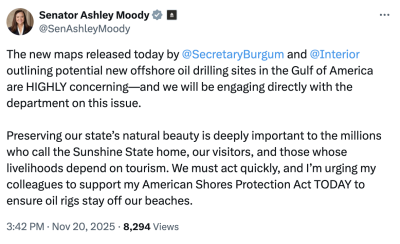
“Preserving our state’s natural beauty is deeply important to the millions who call the Sunshine State home, our visitors, and those whose livelihoods depend on tourism,” Sen. Ashley Moody, R-Fla., wrote in a Nov. 20 social media post on X.
During the runup to the 2020 presidential election, Trump extended a 2012 Obama-era moratorium on oil drilling off Florida and the Southeast coast, reversing his administration’s previous intention to open more of the continental shelf to exploration. The sweeping reversal alarmed both legacy oil and gas industries and the fledging U.S. offshore wind industry.
At a campaign event then in Jupiter, Fla., Trump announced he would sign a presidential order extending the moratorium, which presently would expire in June 2022, effectively extending the ban leasing for 10 years into June 2032.
Opposition to offshore oil development has long been a bipartisan issue in Florida, after the Deepwater Horizon blowout and spill damaged Gulf of Mexico fisheries and Panhandle beaches. In January 2018 then-Gov. Rick Scott insisted waters near Florida be exempted from the Department of Interior’s leasing plans, and then-Interior Secretary Ryan Zinke complied – again in a move seen as improving Republican election prospects.
Despite that longstanding political peril, oil industry advocates and allies in Washington say planning for additional Gulf leasing is essential to future energy needs.
“By moving forward with the development of a robust, forward-thinking leasing plan, we are ensuring that America’s offshore industry stays strong, our workers stay employed, and our nation remains energy dominant for decades to come,” Burgum said in announcing the leasing plan.
“Offshore oil and gas development requires long-term vision, steady policy, and the confidence for companies to invest in American energy. For years, that confidence was undercut by the Biden Administration’s failed leasing policies,” said Jarrod Agen, executive director of the National Energy Dominance Council, the White House’s government coordinating group.
“By putting a real leasing plan back on track, we’re restoring energy security, protecting American jobs, and strengthening the nation’s ability to lead on energy for decades to come.”
“Offshore production accounts for roughly 15% of the nation’s domestic oil output,” according to the Interior Department. “The Outer Continental Shelf is estimated to contain about 68.8 billion barrels of oil and 229 trillion cubic feet of natural gas yet to be discovered.”
The National Ocean Industries Association cheered on the new five-year plan.
"While the Central and Western Gulf, now designated as GOA Program Area A, remain core areas for investment and energy production, a forward-looking approach that evaluates new areas ensures the U.S. remains competitive and secure in meeting future energy needs,” said NOIA president Erik Milito. “Energy demand is on the rise and America’s offshore basins are a shining opportunity for U.S. competitiveness and leadership.”
“Moreover, energy security is national security. The Gulf is an energy powerhouse, producing nearly 2 million barrels of oil per day with production recognized as among the lowest carbon intensity in the world. A clear leasing schedule gives companies the certainty to invest, strengthens supply chains, bolsters communities, and keeps the U.S. competitive in a rapidly evolving global energy landscape.”