



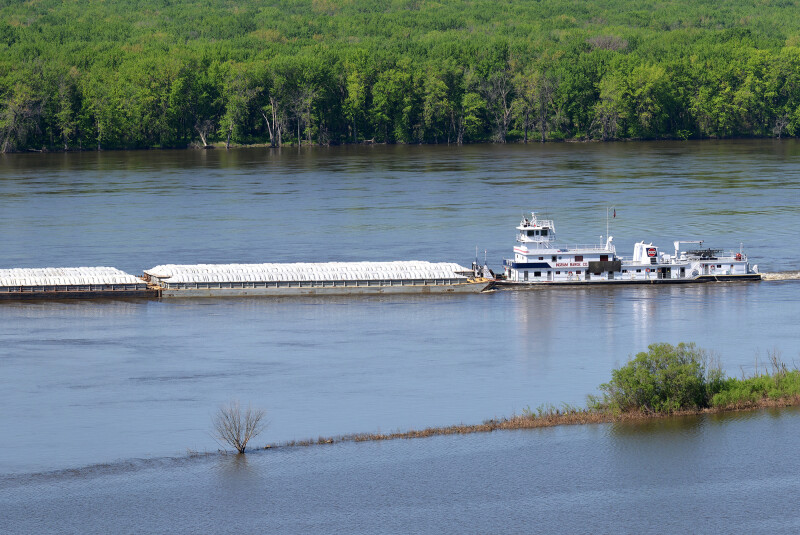
The U.S. Department of Transportation (DOT) announced on Thursday a major expansion of the U.S. Marine Highway Program (USMHP), designating 848 additional miles of navigable waterways and approving 14 new route sponsors, including several in the Great Lakes region.
The USMHP, administered by the DOT's Maritime Administration (Marad), provides competitive grants for projects on designated marine highway routes that offer effective alternatives to traditional land-based transportation. By promoting water-based transport, the program seeks to reduce congestion, enhance surface transportation efficiency, and raise public awareness of the benefits of marine highways.
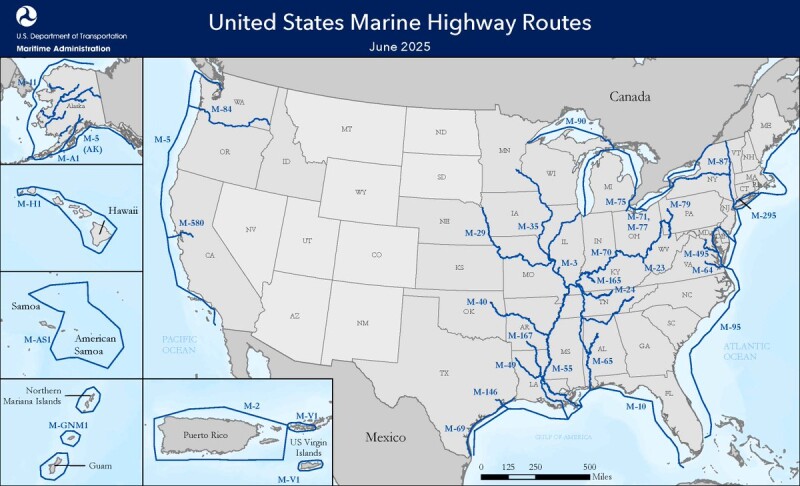
The newly announced expansion brings the Marine Highway network to 27,139 miles across 35 designated routes, further integrating America’s inland waterways into the national freight system and bolstering supply chain resilience, according to the DOT.
According to the Transportation Department, a central component of this announcement is the strengthening of the M-90 route, which spans 2,345 miles through the Great Lakes from Minnesota to New York. Seven new sponsors have joined M-90, including the state departments of transportation for Wisconsin, Illinois, Minnesota, Michigan, and New York, along with the Ports of Indiana and the Erie-Western Pennsylvania Port Authority.
“Coming from the Midwest, I’ve seen firsthand how maritime dominance isn’t just about our oceans. Our nation's many rivers and inland ports are crucial resources to moving great American products to markets across the country and around the world," said U.S. Transportation Secretary Sean P. Duffy. “Expanding the Marine Highway Program will strengthen the Great Lakes economy and other regional communities.”
"The Lake Carriers’ Association is pleased that the Department of Transportation recognizes the importance of the Great Lakes Navigation System," said Eric Peace, the trade group's vice president. "It is estimated that Great Lakes shipping provides a transportation savings rate of $3.9 billion over other modes. U.S.-flagged vessel over 1,000' long transport 70,000 tons of raw material each trip, which keeps North American manufacturing operating at peak efficiency. That 70,000 tons moved efficiently by the marine highway keeps 2,800 trucks off congested roads and 700 railcars out of people’s backyards."
In addition to the M-90 enhancements, MARAD approved four newly designated marine highway routes:
- M-23 (20 miles): Big Sandy River – Co-sponsored by the Kentucky and West Virginia Departments of Transportation
- M-24 (382 miles): Cumberland River – Co-sponsored by the Kentucky and Tennessee Departments of Transportation
- M-165 (109 miles): Green River – Sponsored by the Kentucky Transportation Cabinet
- M-167 (337 miles): Ouachita River – Co-sponsored by the Louisiana Department of Transportation & Development and the Arkansas Waterways Commission
“By adding local sponsors to the Marine Highway Program who know these regions well, we can help more American communities and businesses prosper,” said Sang Yi, Marad's acting administrator. “Bringing more partners into the marine transportation network is a no-brainer.”
Route sponsors are responsible for endorsing applicants seeking federal assistance under the USMHP grant program and providing local oversight. These partnerships ensure that projects are tailored to meet the specific needs of regional economies and communities.
"We’re proud to do our part to welcome these rivers to U.S. Marine Highway Program to elevate the visibility of these vital inland waterways and spur economic development in our New Kentucky Home," said Naitore Djigbenou, executive director for the Kentucky Transportation Cabinet's public affairs office. "The designation of the Green River, Big Sandy River, and Cumberland River unlocks opportunities for public and private organizations in Kentucky to apply for funding to support freight movement within and through the commonwealth."
Dan Pallme, Tennessee Department of Transportation (TDOT) assistant chief of planning and passenger transport, rail, and freight director, said, "TDOT was excited to join the Kentucky Transportation Cabinet in supporting and applying for the M-24 application to the Maritime Administration. The M-24 designation (Cumberland River) now gives Tennessee all major marine highway designations on major rivers that additionally support all our largest population centers (Nashville, Memphis, Knoxville, Chattanooga, and Clarksville) by a water modal option. The Cumberland River, which connects Nashville to Clarksville via a navigable waterway, can connect to the Mississippi River or the Tennessee-Tombigbee Waterway to move freight worldwide.
"This designation will open the industry and Tennessee to another source of potential funding and opportunities to bring jobs, industry, and people to Tennessee via the waterway," Pallme added. "TDOT plans to communicate this designation with all our waterway partners to inform them of these funding opportunities. We appreciate Secretary Duffy and Marad recognizing the 382 miles of the Cumberland River as Marine Highway 24."
The USMHP is currently accepting grant applications through July 15, the U.S. DOT said.
