



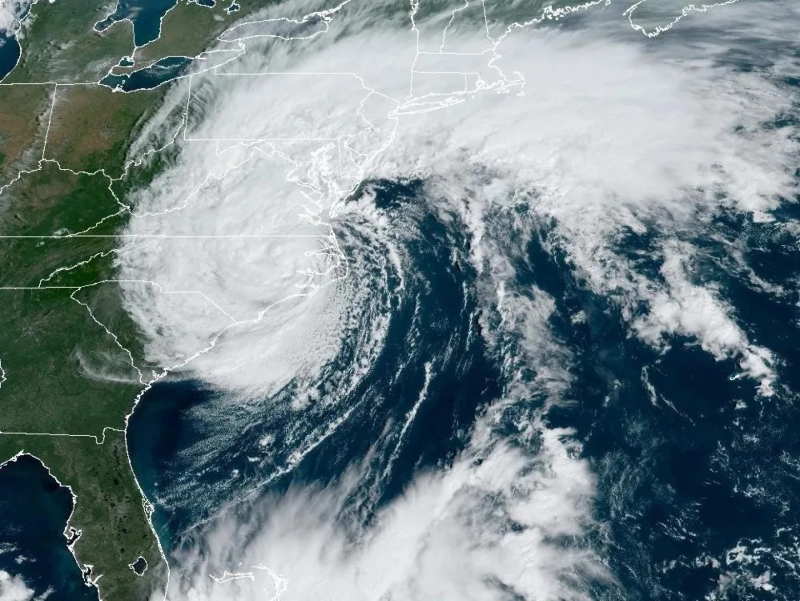
Delaware Gov. Matt Meyer has asked President Donald J. Trump to direct the U.S. Army Corps of Engineers (USACE) to launch emergency coastal restoration efforts under Section 8327 of the Water Resources Development Act (WRDA) of 2022, following a series of destructive nor’easters that severely damaged the state’s shoreline.
In a letter to the White House, Meyer said that sustained storms have eroded dunes, breached beaches, and weakened storm protection systems along Delaware’s coast, posing immediate risks to public safety, transportation, and the state’s economy.
“The duration and force of these storms have caused damage equal to, and in some cases worse than, a hurricane,” Meyer wrote. “Coastal breaches and dune failures pose direct risks to public safety, emergency response operations, and economic stability.”
Gov. Meyer highlighted that under Section 8327 of WRDA 2022, the Secretary of the Army is authorized to restore federally maintained structures and public beaches in Delaware that have been damaged by wind, wave, or water action from a nor’easter when that damage prevents adequate protection from inundation or coastal storms.
Meyer said that Delaware’s current conditions clearly meet that threshold. He urged the President to instruct USACE to determine that the section’s emergency conditions have been met, authorize immediate restoration work, and prioritize Delaware’s coastal recovery efforts.
“These beaches and dune systems are critical public infrastructure,” Meyer wrote. “They protect homes, roads, and small businesses from storm surge and flooding. Every week of delay increases the risk to life, property, and long-term recovery costs.”
The governor’s letter highlighted that high winds and elevated tides have compromised storm protection systems and threatened transportation links such as the Indian River Bridge, a key coastal connector. The damage has left several stretches of shoreline vulnerable to additional erosion, making them a priority for dredging and beach nourishment operations.
For USACE and its network of dredging contractors, the emergency designation could accelerate mobilization of equipment, sand sourcing, and nourishment projects that typically take months of planning. Emergency authority under WRDA allows the Corps to bypass normal budgeting cycles and move quickly to stabilize at-risk coastal infrastructure, Meyer said.
Meyer emphasized that Delaware’s economy depends on these Corps-maintained coastal systems, which serve as both environmental barriers and economic drivers. The state’s beaches support a multibillion-dollar tourism industry and protect low-lying agricultural lands that are vital to regional food supply chains.
Meyer reaffirmed Delaware’s readiness to coordinate with federal partners to expedite work on storm-damage assessments and restoration plans. He called on the administration to treat Delaware’s shoreline recovery with the same urgency as hurricane-related projects in other coastal states.
“Delaware stands ready to collaborate with the USACE at every step,” Meyer wrote. “Swift federal action is needed before additional storms cause preventable damage.”
The U.S. Army Corps of Engineers Philadelphia District oversees Delaware’s coastal storm damage reduction projects, including Rehoboth, Dewey, Bethany, and Fenwick Island beach nourishment programs. If granted emergency authority, dredging contractors active in the region could be mobilized quickly to restore dunes, renourish beaches, and repair storm barriers before the next major weather event, Meyer said.
