



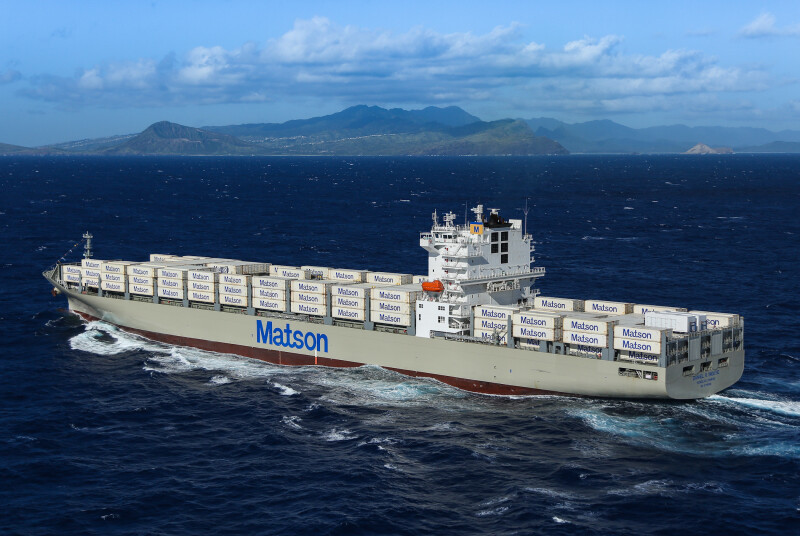
U.S. cargo carrier Matson, Inc. announced Nov. 3 it has a product agreement with WhaleSpotter Corp. to purchase and deploy a whale detection system developed by the Woods Hole Oceanographic Institution (WHOI). Matson says the plan will make it the first container shipping company to deploy the advanced protection technology.
“Developed at WHOI with support from Matson and other contributors, the WhaleSpotter system combines thermal and AI-driven detection, and 24/7 real-time verified monitoring to reliably detect whales up to three nautical miles away, day or night,” according to a Matson statement. “The system's real-time alerts give vessel crews the opportunity to adjust course and reduce the risk of whale strikes.”
The National Oceanic and Atmospheric Administration, whale science and conservation groups say ship strikes are a leading cause of whale deaths off U.S. coasts, along with entanglement in marine debris such as lost fishing gear.
NOAA regularly issues advisories to mariners to beware of whale activity near U.S. ports and adhere to speed limits set for dynamic management areas, particularly off the U.S. East Coast when the highly endangered North Atlantic right whale population is on the move.
In 2023, Matson provided WHOI with a $1 million research grant, as well as access to vessels and crews in the Pacific to help advance the system's development. Since then, Matson has successfully trialed three WhaleSpotter units on its containerships and has ordered four additional units for vessels serving Hawaii and Alaska.
The company says deployments on Matson ships have demonstrated that WhaleSpotter can detect surfacing whales miles away and deliver verified alerts within seconds.
"The technology is remarkable — and now refined to meet our zero-false-alert requirements," said Matt Cox, Chairman and CEO of Matson. "Our crews are enthusiastic about this new tool and are already using it to help protect whales."
"Matson has been a true partner — not just in the research phase but through every step of refinement and testing," said Shawn Henry, CEO of WhaleSpotter. "Their operational feedback on installation, connectivity, and user experience has helped us prepare the system for large scale commercial deployment. Together, we're proving that advanced technology can help protect marine life while improving maritime operations."
WhaleSpotter was co-founded in 2024 by WHOI scientist Daniel Zitterbart and Sebastian Richter, co-developer of the AI detection algorithm. Shawn Henry, a veteran technology executive and former president, COO and CEO of microlocation company Humatics, serves as CEO of WhaleSpotter, leading the company's transition from research to commercial production. WhaleSpotter manufactures the commercial camera units in the U.S. under an exclusive technology license from WHOI.
WhaleSpotter's now has the first 50 commercial production units deployed and plans to expand deployments worldwide on container, cruise, and research vessels.
