



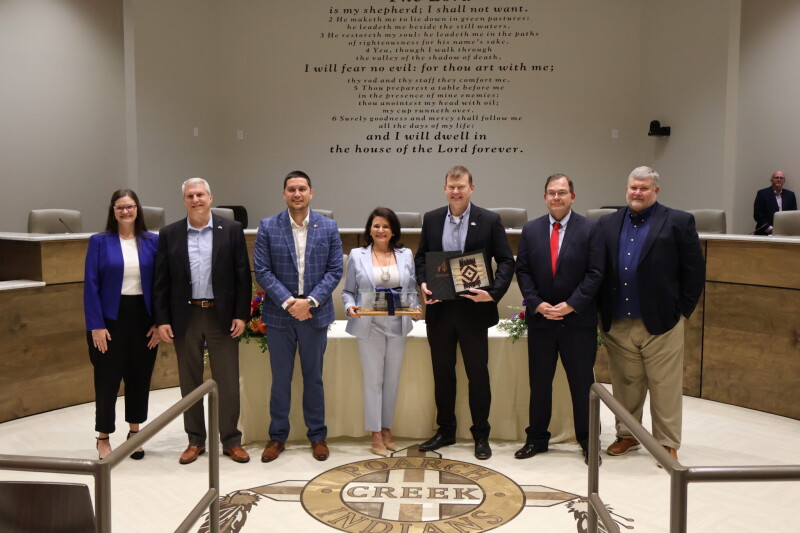
Austal USA and the Poarch Creek Indians (PCI) have signed a memorandum of understanding (MOU) aimed at expanding shipbuilding capacity along the U.S. Gulf Coast in support of the Navy’s maritime industrial base and submarine industrial base.
The agreement, announced Feb. 27 in Mobile, Ala., establishes a strategic outsourcing partnership intended to support rising production demands for both surface ships and submarines tied to national shipbuilding priorities.
Under the MOU, PCI anticipates providing support services related to the expansion of Austal USA’s newest module manufacturing facility, which is expected to come online in 2026. Workforce development initiatives and production support programs tied to the agreement are currently being developed and will be implemented in phases to align with Austal USA’s existing contract portfolio.
“This MOU is about forming new partnerships and expanding the maritime and submarine industrial bases in Alabama and along the Gulf Coast,” said Gene Miller, Austal USA’s interim president. “By aligning with PCI, a proven partner known well for the economic impact the organization has had throughout the state of Alabama, we can scale production, reduce schedule risk, strengthen supply chains, and deliver for the U.S. government while investing in American skilled workers and suppliers.”
PCI officials said the partnership is intended to support workforce development while strengthening the region’s role in national shipbuilding efforts.
“We are proud to join Austal USA in supporting critical shipbuilding capabilities for our nation,” said Stephanie Bryan, PCI tribal chair and CEO. “This partnership creates new opportunities for our people, supports long-term workforce development, and strengthens Alabama’s role in advancing America’s maritime readiness.”
According to Austal USA, activities conducted under the agreement will adhere to the company’s production specifications and U.S. government requirements, including quality assurance standards, cybersecurity controls, export compliance, and buy American provisions.
The partnership comes as U.S. shipbuilders and suppliers work to expand capacity across the naval shipbuilding enterprise to meet increased demand tied to Navy fleet goals and submarine production targets.
