



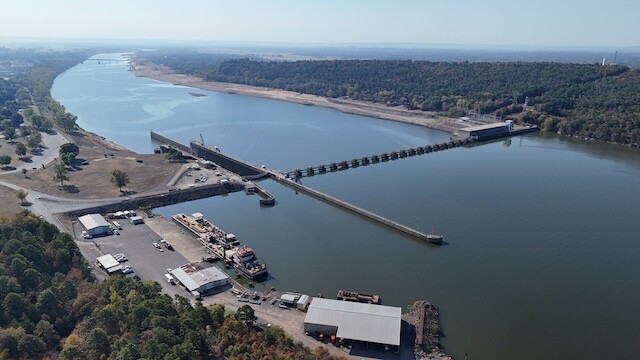
The Corps of Engineers, Little Rock District, has completed emergency repairs at Dardanelle Lock and Dam, restoring navigation on the McClellan-Kerr Arkansas River Navigation System (MKARNS) as of Dec. 3, 2025.
The lock was closed following a Nov. 21 allision when a downbound barge struck the upstream miter gate. Inspections revealed significant structural damage above and below the waterline, requiring immediate closure to ensure safety and reliability.
Crews mobilized quickly and began lowering the Dardanelle pool to elevation 336' on Nov. 26 to facilitate underwater repairs. Working through cold, rainy conditions and sacrificing holiday leave, engineers and maintenance teams completed Phase I repairs above the waterline, then advanced to Phase II by addressing submerged structural members.
"Today’s reopening of Dardanelle Lock is a testament to the dedication and sacrifice of our crews and engineers,” Col. Patrick Caukin, commander of the Little Rock District, said in a statement announcing the reopening of the lock. “Many team members returned early from holiday leave and even left deer camps to get this work done. Their commitment reflects the professionalism and resilience expected of America’s engineers, and I could not be prouder of their efforts.”
The MKARNS is a vital corridor for regional commerce and national supply chains, moving more than 12 million tons of commodities annually. Ports along the system serve an 18‑state region stretching as far west as California and as far north as Montana, underscoring the waterway’s role in connecting America’s heartland to national and global markets.
Throughout the closure, USACE coordinated closely with navigation stakeholders, issuing notices and conducting industry calls to maintain a shared operating picture. With navigation now restored, the Corps remains committed to ensuring the long-term reliability and performance of the MKARNS for the communities and industries that depend on it.
For more than 50 years, the McClellan Kerr Arkansas River Navigation System has supported inland commerce across the heartland. The 445-mile system includes 18 locks and dams, four federal hydropower plants, and four municipal hydropower plants. It connects five public ports in Oklahoma and Arkansas to the Mississippi River, allowing goods to reach global markets. The system serves 18 states and moves an average of 12 million tons of cargo each year.
